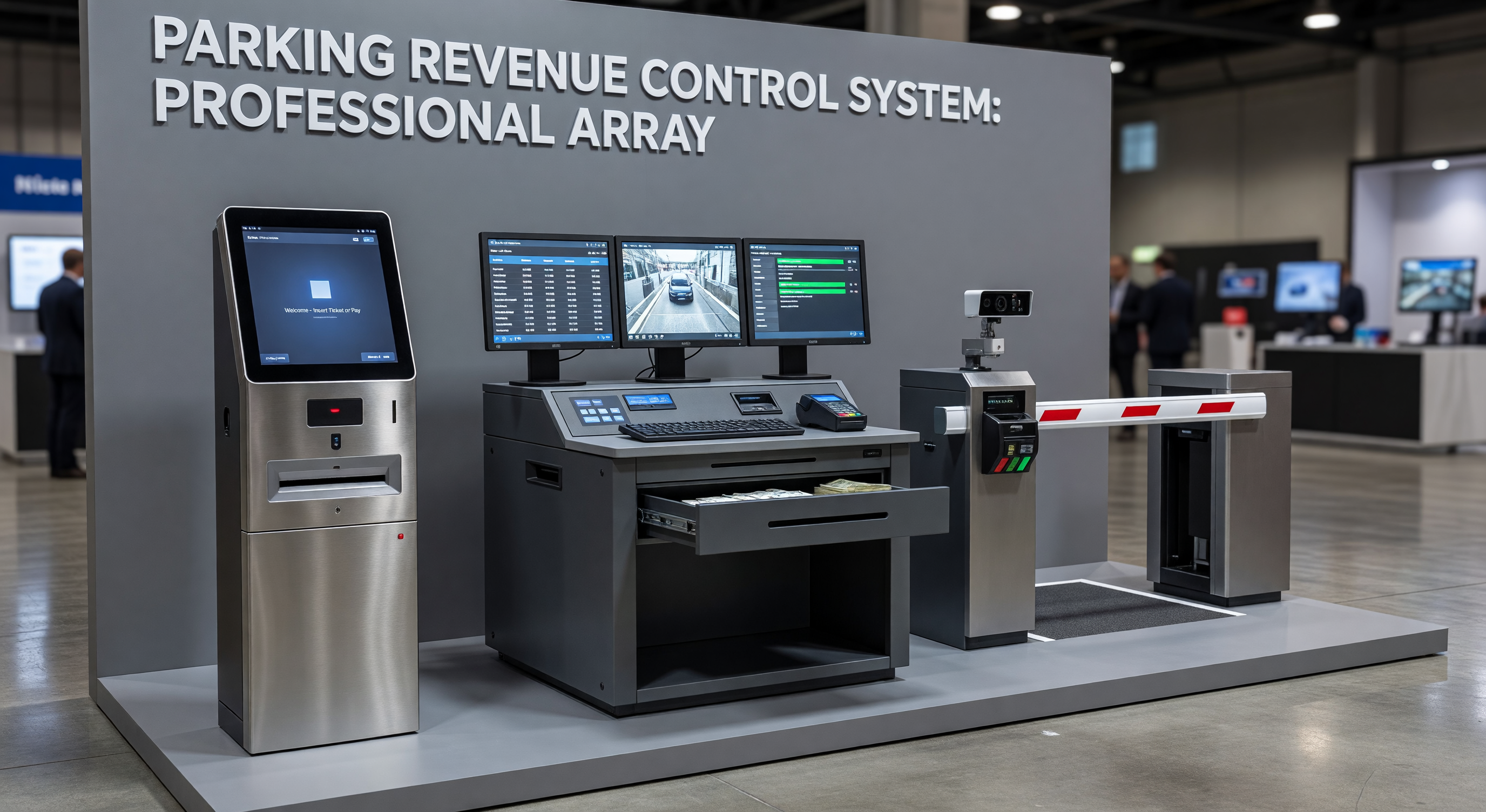
Revenue control in parking operations has two components: the equipment that captures payment (pay stations, gate systems, ticket dispensers) and the controls that ensure the captured payment reaches the operator rather than leaking through operational failures, system errors, or deliberate theft. This guide addresses the hardware and operational control components of the revenue protection layer — the less visible but equally important half of the PARCS equation.
The Revenue Leakage Problem
Parking operations have more revenue leakage points than most service businesses. Revenue can leak through:
- System errors: Transactions processed but not recorded; gate openings without corresponding transactions
- Operational failures: Gates left open by staff; grace period abuse; expired permit holders accessing the facility
- Internal theft: Cash collection shrinkage; voided transactions; unauthorized free pass-outs
- Evasion: Vehicles exiting without payment through tailgating, gate arm rushing, or back-door exits
A facility with 500 transient transactions per day at $10 average and a 3% revenue leakage rate loses $54,750 annually. At 5% leakage, $91,250. The revenue control system exists to minimize this leakage, and its hardware components make the controls operationally practical.
Core Revenue Control Hardware
Entry Ticket Dispensers
In ticket-based PARCS systems, the entry ticket is the primary revenue control instrument — it creates the transaction record at the moment a vehicle enters. Revenue control requirements for entry dispensers:
Ticket serialization: Each ticket must have a unique, unguessable identifier. Serialized magnetic stripe or barcode tickets allow the system to detect duplicate tickets (the same ticket presented twice at exit) and invalid tickets (numbers outside the issued range).
Clock accuracy: Ticket timestamps determine fee calculation. Clock drift in dispenser systems can allow undercharging at exit if the entry time is recorded later than actual. Verify that entry dispenser clocks synchronize with the PARCS server regularly.
Loop confirmation: The entry dispenser should only issue a ticket when a vehicle is confirmed present by the detection loop. Tickets issued without a vehicle present create orphaned records that distort occupancy counts and can be used as free passes.
Ticket stock control: Blank ticket stock must be stored securely. Access to blank ticket stock allows issuance of unauthorized tickets that bypass the revenue recording system.
Exit Control and Fee Calculation
The exit point is where revenue is collected for ticket-based systems. Revenue control requirements at exit:
Ticket reading and validation: Exit terminals must verify that the ticket was issued by the facility’s system (serial number within valid range), hasn’t been previously used (duplicate exit detection), and hasn’t been manually altered (barcode or magnetic stripe integrity check).
Fee calculation audit: The fee calculation should occur at exit and be logged with: entry time, exit time, duration, rate applied, and fee assessed. Any manual overrides to the calculated fee should require supervisor authorization and be logged with the overriding employee’s credentials.
Revenue hold: Vehicles that insert an invalid ticket or owe a specific amount should be held at the exit gate until payment is confirmed. Automatic gate opening for unresolved transactions creates significant revenue leakage.
Pay-on-Foot Stations
Pay-on-foot stations are the cash and card payment point in gated PARCS systems. Revenue control requirements:
Transaction logging: Every transaction must be logged with timestamp, ticket information, payment method, amount tendered, change dispensed, and transaction ID. Logs should be tamper-evident.
Cash vault security: As discussed in the cash management guide, vault security prevents external theft. Revenue control additionally requires internal controls: two-person collection, vault transaction logs, and reconciliation against the software record.
Void and exception tracking: Every transaction exception (voided transaction, fee override, complimentary exit) must require supervisor authorization and be logged with the reason and authorizing employee. Unconstrained exception processing is a significant internal revenue leakage source.
Audit and Monitoring Equipment
PARCS Reporting and Audit Logs
The primary audit tool is the PARCS reporting system. Effective revenue audit uses:
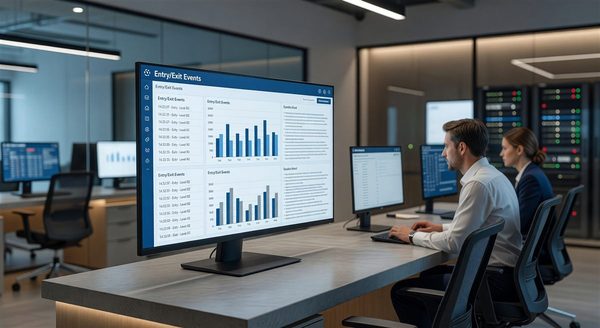
Transaction log completeness: Compare entry ticket count against exit transaction count against paid transaction count. These three numbers should balance with small, explainable variances. Large unexplained gaps indicate system errors or evasion.
Lane event logs: Every gate opening event should have a corresponding transaction (paid exit, valid permit, operator release). Gate openings without corresponding transactions indicate evasion, system errors, or operator override — all of which warrant investigation.
Exception reports: All exceptions (voids, overrides, complimentary exits, manager transactions) in a single report, reviewed by management above the supervisory level that authorized the exceptions. Exception report review is the primary internal theft detection tool.
Remote Monitoring
CCTV monitoring integrated with lane event logs allows real-time observation of gate openings. When a gate opens without a corresponding transaction, the monitoring system can flag the event and create a video clip.
For facilities without active monitoring staff, some PARCS systems offer transaction anomaly alerting — pushing notifications when exception rates exceed normal thresholds.
Cash Audit Equipment
Currency counters: Automated bill counting and denomination sorting speeds cash audit and reduces counting errors. Models with counterfeit detection capability add fraud detection to the counting function.
Counterfeit detection: UV lamps and counterfeit detector pens should be part of every cash collection kit. Counterfeit currency found during counting should be sequestered and reported; it doesn’t affect revenue reconciliation (since it can’t be deposited) but documents fraud exposure.
Operational Controls That Complement Hardware
Permit Audit Process
Monthly permits are a significant revenue control area. Common leakage patterns:
- Permits for departed employees still being used
- Permit holders sharing credentials with non-permitted vehicles
- Permit holders claiming to have credentials when they don’t, relying on intercom grace to exit without payment
Control: Regular permit database audits comparing issued permits against authorized holders. LPR monitoring of permit lot entries compared against authorized plate lists. Exit log review for permit holders who exit via intercom rather than valid credential.
Tailgating Detection
Tailgating (an unpaid vehicle following a paid vehicle through the gate without triggering a second gate cycle) is one of the most common evasion methods. Control approaches:
Loop detector timing: A detection loop at the exit configured to detect vehicle separation. If the trailing vehicle triggers the loop after the gate begins closing, it should prompt a re-trigger of the exit process.
Camera-based tailgate detection: Video analytics configured to flag multiple vehicles passing through a single gate cycle.
Physical barriers: In high-evasion facilities, traffic spikes or height restriction bars positioned close to the gate arm physically prevent tailgating.
Grace Period Management
Grace periods (time allowed between payment and exit before additional charges apply) are a necessary customer accommodation. They’re also a significant leakage source if misconfigured.
- Set grace periods to the minimum practical value — 15–20 minutes is typical for walk-to-pay-station and return time
- Log grace period usage by time and by customer to identify abuse patterns (customers who consistently exit just within the grace window)
- Verify that grace period configuration in the PARCS software matches your stated policy
Frequently Asked Questions
What level of transaction variance is acceptable in a well-controlled PARCS operation? Industry benchmarks suggest that ticket-based PARCS operations with good controls should show less than 1% variance between entry tickets issued and exit transactions processed. License-plate-based systems may have slightly higher variances due to plate read rate imperfections. Consistently higher variances warrant investigation.
How do we audit for internal revenue leakage from employee override abuse? Review the exception report (all voids, overrides, complimentary exits) daily. Calculate the override rate per operator (overrides as a percentage of that operator’s total transactions). Operators with significantly higher exception rates than peers warrant closer review. Any individual with override authorization should know that all exceptions are logged and reviewed.
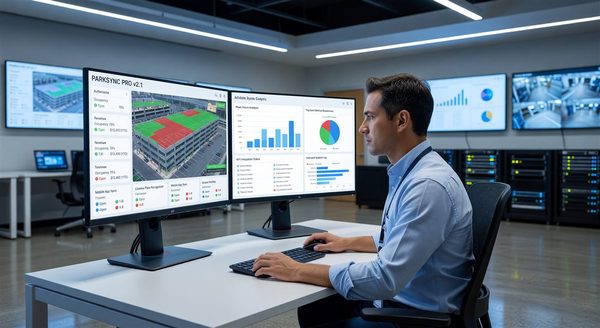
Can we track revenue performance across multiple facilities? Yes — PARCS platforms with multi-facility management provide consolidated reporting across properties. Revenue performance dashboards that compare transaction rates, average revenue per space, and exception rates across facilities quickly surface underperforming locations that warrant audit.
Is revenue control equipment different for monthly permit operations vs. transient operations? Permit operations have a different leakage profile: the risk is unauthorized credential use and permit holders exiting without valid credential. LPR-based permit monitoring provides the best control in permit operations. Transient operations have more touchpoints for leakage (each transaction is a separate revenue event) and require more comprehensive transaction logging and cash controls.
Key Takeaway
Revenue control isn’t a single piece of equipment — it’s the combination of hardware designed to capture transactions, software that logs and reports exceptions, and operational procedures that close the gaps hardware can’t cover. Facilities that invest in all three components see significantly lower revenue leakage than those that rely on any single layer.