The pairing of license plate recognition cameras with pay stations is the enabling technology behind ticketless parking — a system where entry and exit tracking, payment, and enforcement all work without a physical ticket. The integration reduces consumable costs, eliminates ticket fraud, and creates a transaction record that’s more complete and tamper-resistant than paper ticket systems.
But LPR-pay station integration is a specific technical implementation, not just the co-location of two pieces of equipment. This guide covers how the integration works, the technical requirements that determine integration quality, and the operational workflows enabled by a properly integrated system.
LPR-Pay Station Integration Architectures
Architecture 1: Entry/Exit LPR with Pay-on-Foot Station
The most common architecture in gated parking garages:
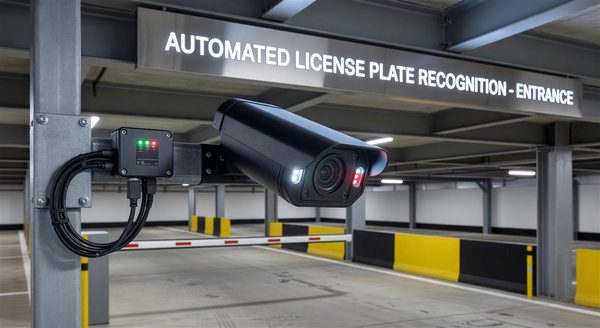
Entry: An LPR camera captures the vehicle’s license plate as it enters. The plate and timestamp are logged in the PARCS system. The entry gate opens.
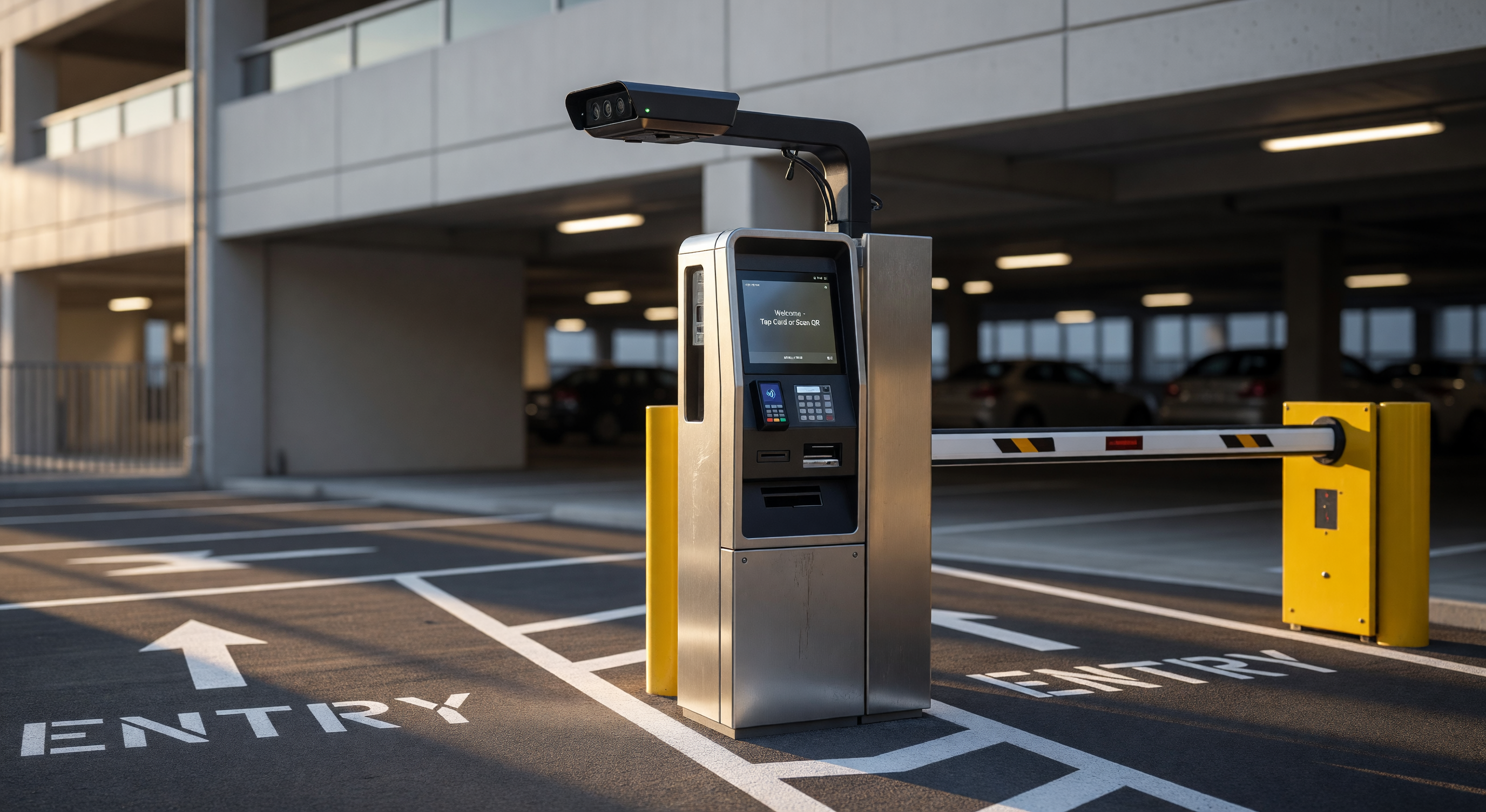
Payment: The customer walks to a pay-on-foot station before returning to their vehicle. At the pay station, they enter their license plate (or the pay station retrieves it automatically using a plate-recognition camera at the station). The system calculates the fee based on entry time and current time.
Exit: The exit LPR camera reads the plate. The system verifies that the plate has a valid payment for the current exit session. If payment is confirmed, the exit gate opens. If not (overstay, no payment), the system requires payment at the exit or routes to intercom.
This architecture requires:
- Entry LPR camera with reliable read rates (95%+)
- PARCS system that stores plate/timestamp records and links them to payment transactions
- Pay station with plate entry (keypad or station-mounted camera)
- Exit LPR camera that queries the same PARCS database
Architecture 2: Pay-by-Plate in Surface Lots (No Gates)
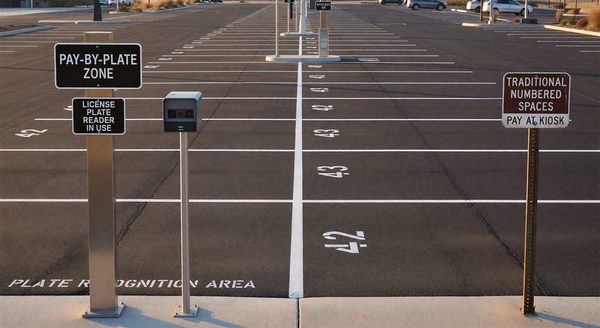
In ungated surface lots:
- Parking: Customer parks in any space and walks to the pay station
- Payment: Customer enters their license plate at the pay station and pays for the desired duration
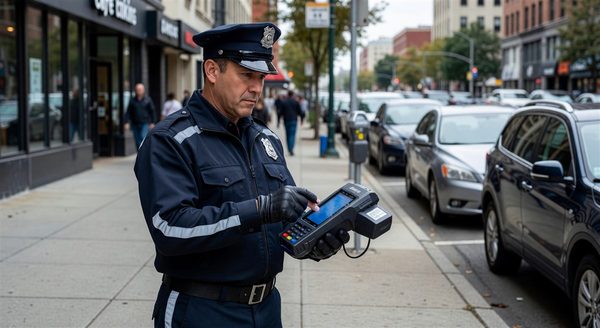
- Enforcement: Enforcement patrols the lot with a vehicle-mounted LPR system or handheld plate scanner, querying the pay station database for each plate read
This architecture doesn’t require LPR cameras at fixed entry/exit points — the LPR is in the enforcement vehicle. The pay station is the sole transaction origination point.
Architecture 3: Fully Automated Plate-Based Entry/Exit
More sophisticated systems use plate recognition for full transactionless access control:
- Monthly permit holders: LPR at entry reads the plate, queries the permit database, and opens the gate automatically — no credential scan required
- Transient parkers: LPR captures entry plate and timestamp; the parker pays via mobile app or pay station; exit LPR confirms payment and opens the gate
This architecture benefits from the highest LPR accuracy requirements — a missed read at entry creates an orphaned record that requires manual resolution.
Technical Requirements for LPR-Pay Station Integration
Data Communication
The LPR system and pay station system must share a common plate-based transaction database. This communication can be implemented as:
Direct API integration: The LPR controller sends plate reads to the PARCS database via API; the pay station queries the same database. All components read and write to a single authoritative source.
Shared database: Both systems access the same underlying database directly. Higher performance but tighter coupling — updates to either system’s schema can break the other’s integration.
Middleware/integration platform: An intermediary translates between LPR data formats and PARCS data formats. More flexible and decoupled, but adds a system component that must be maintained.
For new systems, API integration from a PARCS vendor whose platform natively supports LPR is the simplest approach. For systems integrating components from different vendors, require demonstration of the specific integration in a production facility before committing.
LPR Accuracy Requirements for Payment Integration
LPR in a payment context has higher accuracy requirements than LPR in a surveillance context, because a missed or misread plate directly creates a payment dispute:
- Entry camera accuracy: 97%+ read rate. Missed entry reads create unresolvable exit scenarios where the customer’s plate shows no entry record.
- Exit camera accuracy: 97%+ read rate. Missed exit reads create false non-payment alerts for legitimate paid parkers.
- Pay station camera accuracy (if used): 98%+ for optical plate entry at the station. Misread plates create payment-plate mismatch disputes.
These accuracy targets assume favorable conditions: adequate lighting, correct camera positioning, appropriate IR illumination, and typical plate conditions. Establish accuracy baselines during commissioning and monitor ongoing performance.
Grace Period and Mismatch Handling
No LPR system is perfectly accurate. A well-designed integration includes:
Plate mismatch grace: When exit plate reads don’t exactly match entry plate reads (1–2 character difference), the system can offer a soft match confirmation rather than treating it as a no-match. Soft matches should be logged for review but can be automatically resolved for common OCR errors (O/0, B/8, S/5).
Manual resolution workflow: For complete mismatches (the exit plate has no corresponding entry record), the system should route to an intercom or fee adjustment workflow rather than refusing exit. A customer-facing dispute resolution process is essential.
Overstay handling: When a vehicle’s plate is recognized at exit with a payment that doesn’t cover the full duration, the system should calculate the additional fee and route to payment before gate opening — not simply deny exit.
Pay Station Camera for Plate Entry
Some pay stations include a built-in camera that reads the customer’s license plate as they approach the station, pre-populating the plate field rather than requiring manual entry. This reduces plate entry errors and speeds transaction time.
Requirements for effective station camera integration:
- Camera positioned to read plates on approaching vehicles from the parking aisle (not just standing customers)
- Adequate illumination for plate reading in low-light conditions (many surface lots are used after dark)
- Software integration that allows the customer to confirm the auto-populated plate before completing payment
- Manual entry override for cases where the camera read is incorrect
Accuracy expectations: Station-mounted LPR cameras in variable lighting and approach angles typically achieve 85–95% read accuracy — lower than dedicated lane cameras due to the variable approach geometry. Manual entry correction for failed reads must be quick and clear in the interface design.
Validation Integration in LPR-Pay Station Systems
Validation (comped or discounted parking) is a key feature for retail, hotel, and medical facility parking. In LPR-pay station systems:
QR code validation: The validation provider issues a QR code (via receipt, app, or printed ticket) that the customer scans at the pay station. The system applies the validation discount before calculating the owed fee.
Online validation lookup: The customer’s plate is used as the validation lookup key. The validator enters the plate into a web portal; the pay station recognizes the plate as validated when the customer approaches.
Automatic validation at exit: For high-validation-rate facilities (hotel guests, all medical visitors), validation can be triggered automatically based on plate match against a validated-entry list rather than requiring the customer to initiate it.
Frequently Asked Questions
What happens when a customer’s plate is misread at entry and they’ve paid by plate for a different plate? This creates a payment mismatch at exit — the exit reads the correct plate, finds no payment, and routes to dispute resolution. The operator must review the transaction log to match the payment to the correct vehicle. LPR integration platforms should provide an exception resolution workflow for these cases; how well this is handled operationally is a key differentiator between mature and immature LPR-pay station integrations.
Can the same PARCS system handle both LPR-based and ticket-based transactions? Most modern PARCS platforms support hybrid operation — ticket-based for some lanes (e.g., visitors who prefer tickets) and LPR-based for others (e.g., permit holders and frequent parkers). Hybrid operation requires careful lane configuration and staff training to manage the mixed transaction types.
How do we handle a visitor who doesn’t know their rental car’s plate number? Pay stations should include a manual entry fallback where the customer can enter any identifier and receive a paper receipt-style confirmation. At exit, the operator resolves the mismatch via intercom or with a staff-issued exit credential. This scenario is common enough that a documented procedure is necessary in facilities with significant rental car usage.
What network infrastructure supports LPR-pay station integration? Both the LPR cameras and pay stations require network connectivity to the PARCS database. LPR controllers typically connect via Ethernet; pay stations connect via Ethernet or cellular. The PARCS server (cloud or on-premise) must be accessible to both. Design the network with adequate bandwidth and redundancy — connectivity loss between components creates transaction matching failures.
Key Takeaway
LPR-pay station integration creates the operational foundation for ticketless parking, but the integration quality depends on both technical implementation and accuracy performance. Require demonstrated integration accuracy data from comparable facilities — not just architecture descriptions — before committing to an integrated LPR-pay station deployment.