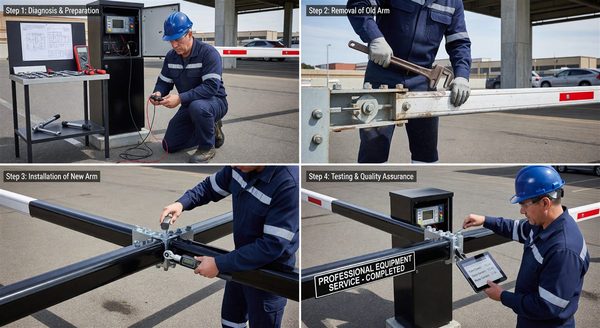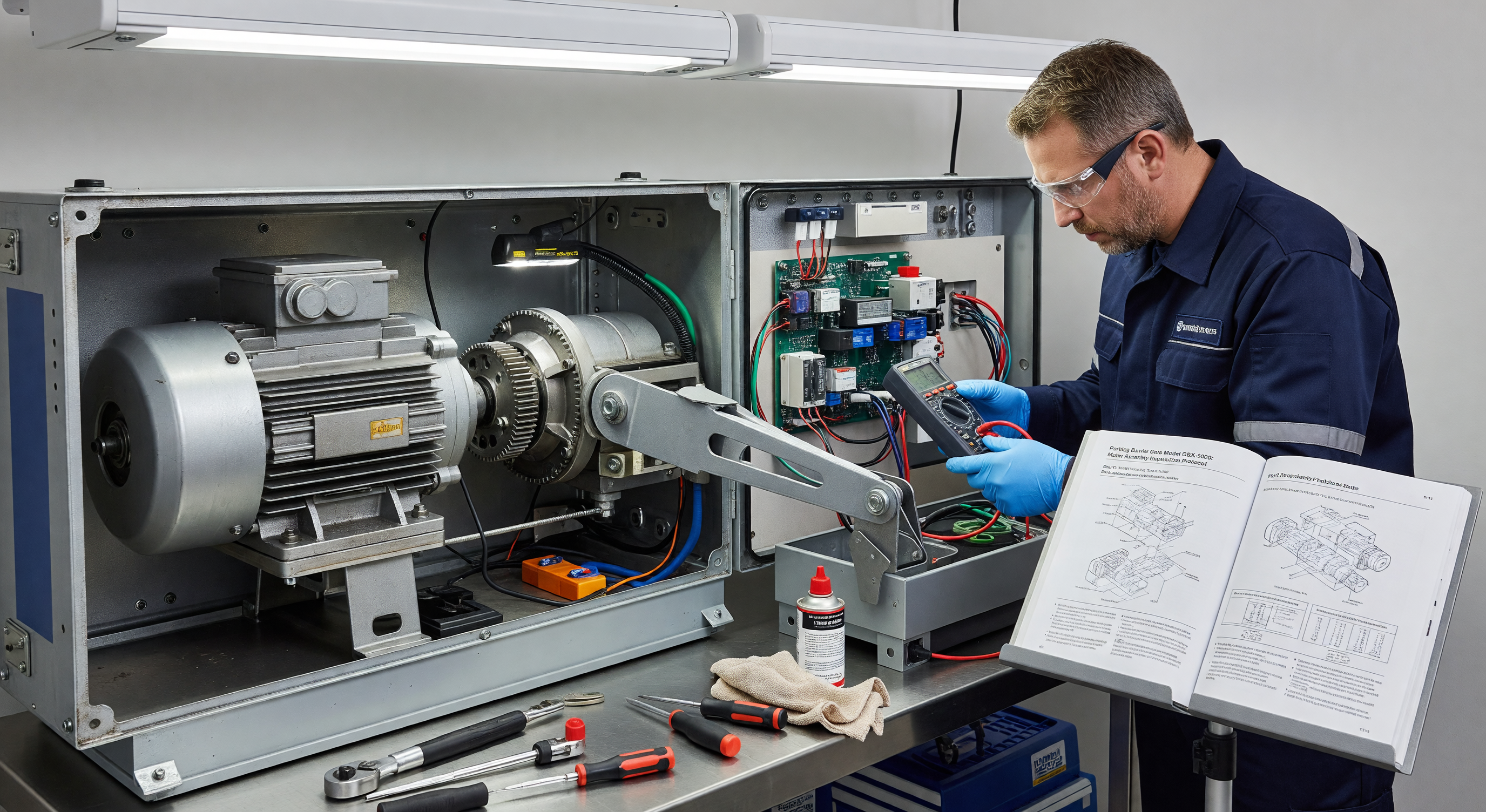
Gate motors are the mechanical heart of a parking barrier gate, and their failure mode matters significantly to operations. Unlike most electronic components that fail suddenly, gate motors typically signal their approaching end of life through observable changes in behavior: slower operation, increased noise, higher power draw, or inconsistent speed. Recognizing these signals and understanding the service requirements that extend motor life separates facilities with predictable maintenance costs from those managing emergency motor replacements.
AC vs. DC Gate Motors: The Fundamental Difference
AC Gate Motors
AC motors are induction motors powered directly from the facility’s AC supply (typically 120V or 240V AC). They use a squirrel-cage rotor with no brushes or commutator — the rotating magnetic field in the stator induces current in the rotor without physical contact. The absence of brushes and commutator is a significant advantage for maintenance.
Operational characteristics:
- Fixed speed determined by the AC supply frequency (60 Hz in North America) and motor pole count
- No speed regulation without a variable frequency drive (VFD) or other control circuit
- Start and stop characteristics are determined by the motor type (capacitor-start, two-value capacitor) and control circuit
- Generally more robust against harsh environmental conditions (moisture, dust) due to simpler construction
- Heavier than equivalent DC motors for the same power output
Failure modes:
- Winding insulation breakdown (from thermal cycling, moisture, overload)
- Bearing failure (most common maintenance item)
- Capacitor failure (in capacitor-start and capacitor-run motors)
DC Gate Motors
DC motors are powered by rectified DC (from an AC/DC power supply in the gate cabinet) or from battery systems in some configurations. The DC motor uses brushes and a commutator to maintain electrical contact with the rotating armature — a design that enables speed control but introduces wear components.
Operational characteristics:
- Variable speed control through voltage or PWM regulation — allows smooth acceleration and deceleration profiles
- Better controlled cycle behavior than fixed-speed AC motors
- Lighter for equivalent torque output
- More responsive to load changes
Failure modes:
- Brush wear (primary wear item — periodic replacement required)
- Commutator wear and scoring
- Armature winding failure (less common than brush failure)
- Bearing failure
Brushless DC Motors
Some manufacturers are adopting brushless DC motors (BLDC) in newer gate designs. BLDC motors combine the speed control advantages of DC motors with the maintenance simplicity of AC motors — no brushes to replace. They require more sophisticated motor controllers but offer potentially longer service life between maintenance interventions.
Motor Lifespan and Cycle Ratings
Gate motors are typically rated in total operating cycles rather than years, because usage intensity varies so widely between facilities.
Typical cycle ratings:
| Motor Type | Rated Cycles | Approximate Years at 500 cycles/day |
|---|---|---|
| Entry-level AC motor | 500,000–1,000,000 | 2.7–5.5 years |
| Commercial AC motor | 2,000,000–5,000,000 | 10–27 years |
| Entry-level DC motor | 1,000,000–2,000,000 | 5.5–11 years |
| Commercial DC motor | 3,000,000–6,000,000 | 16–33 years |
Calculating your cycle rate:
- Estimate vehicles per day through the gate
- Each vehicle creates 2 cycles (open + close)
- Example: 300 vehicles/day = 600 cycles/day
At 600 cycles/day, a motor rated for 2,000,000 cycles has a theoretical life of 3,333 days, or about 9 years — assuming cycles occur within rated speed and load parameters.
Service Intervals
DC Motor Brush Replacement
Brushes in DC motors are the primary wear item. Brush wear rate depends on motor load, operating speed, and brush material. Most commercial DC gate motors require brush inspection every 500,000–1,000,000 cycles.
How to inspect brushes:
- Power down and lock out the gate
- Access the motor brush holders (typically accessed through brush access holes in the motor end cap)
- Remove brushes and measure remaining length against the manufacturer’s minimum specification (typically 1/4" or 6mm minimum)
- Inspect the commutator surface for scoring, copper deposits, or uneven wear
- Replace brushes in complete sets — never replace one brush without replacing all brushes in the motor
If the commutator shows significant scoring or grooving: Light scoring can be polished with commutator paper; significant grooves require commutator machining. A motor requiring commutator service is approaching the end of its service life — evaluate whether the total repair cost justifies continued operation.
Bearing Maintenance (Both Motor Types)
Bearings are the primary failure point in AC motors and a significant failure point in DC motors.
Bearing lubrication: Most commercial gate motors use sealed bearings that are lubricated for life. These don’t require periodic greasing but must be replaced when bearing play or noise indicates wear.
Bearing inspection signs:
- Audible noise during operation (grinding, clicking, or a sustained high-pitched whine)
- Vibration during operation that wasn’t present previously
- Increased heat at the bearing end caps after operation
- Physical play in the motor shaft (axial or radial) detectable by hand
Replacement interval: Even without failure signs, bearing replacement at the motor manufacturer’s recommended interval (typically at motor brush replacement in DC motors, or every 5–7 years in AC motors) is good preventive practice in high-cycle applications.
Signs That a Motor Is Approaching End of Life
The following observations indicate a gate motor that warrants close attention or planned replacement:
Slow cycle time: A gate that previously cycled in 2 seconds now takes 3.5 seconds is losing torque — either from winding degradation, brush wear (DC), or mechanical friction from bearing wear.
Inconsistent cycle speed: Gates that open at different speeds on consecutive cycles suggest intermittent winding or brush contact problems.
Increased operating temperature: Motor winding insulation degrades with thermal cycling. A motor running significantly hotter than when it was new (assessable by comparing with a non-contact thermometer at consistent ambient conditions) is developing insulation issues.
Current draw changes: Motors with a failing commutator, shorted winding turn, or excessive mechanical friction show increased current draw. If your gate cabinet includes an ammeter or if you use a clamp meter to measure motor current during a cycle, compare current draw against historical readings.
Physical noise changes: Any new grinding, scraping, or irregular sound from the motor during operation warrants immediate investigation.
Motor Replacement vs. Repair
For most commercial parking gate motors, replacement is more cost-effective than major repair (rewind, armature replacement) when the motor shows significant failure progression. Motor replacement costs $300–$800 for most standard gate motors; rewind costs $200–$500 for the rewind alone plus labor — and a rewound motor has worn bearings, worn brushes (if applicable), and commutator wear that weren’t addressed.
Exception: specialty large-motor gate systems where motor replacement cost is $1,500–$3,000 or more. At that cost level, component repair may be economic.
Frequently Asked Questions
Is there a way to extend gate motor life beyond the rated cycle count? Proper preventive maintenance (brush replacement schedule, bearing monitoring, keeping the motor cabinet clean and dry) extends motor life toward the rated maximum. Operating gates within speed and load specifications — not forcing them against blocked gate arms or under overload conditions — also preserves the rated cycle life.
How do I know which motor type is in my existing gates? Open the gate cabinet and inspect the motor. AC motors typically connect directly to the AC power supply; DC motors connect through a power supply/rectifier board in the cabinet. If brushes are visible or accessible, it’s a DC motor.
Can I upgrade from an AC motor to a DC motor (or vice versa) in an existing gate? Motor replacement in a gate cabinet typically requires replacing the motor and the control board. Changing motor types requires matching the new motor to a compatible control board and ensuring the motor frame and shaft match the gate’s mechanical coupling. This is a vendor-engineering question for the specific gate model.
What is the risk of operating a gate past its rated cycle life? The rated cycle life is a statistical specification — some motors exceed it significantly, others fail before reaching it. Operating past rated cycles increases failure probability but doesn’t guarantee immediate failure. Plan replacement in the budget cycle following rated cycle completion rather than waiting for failure.
Key Takeaway
Gate motor service life is primarily a function of cycle count, not calendar time. Calculate your facility’s daily cycle rate, compare it against the motor’s rated life, and plan maintenance and replacement accordingly. DC motor brush replacement on schedule is the single most cost-effective motor maintenance action available; bearing monitoring catches the second most common failure mode.