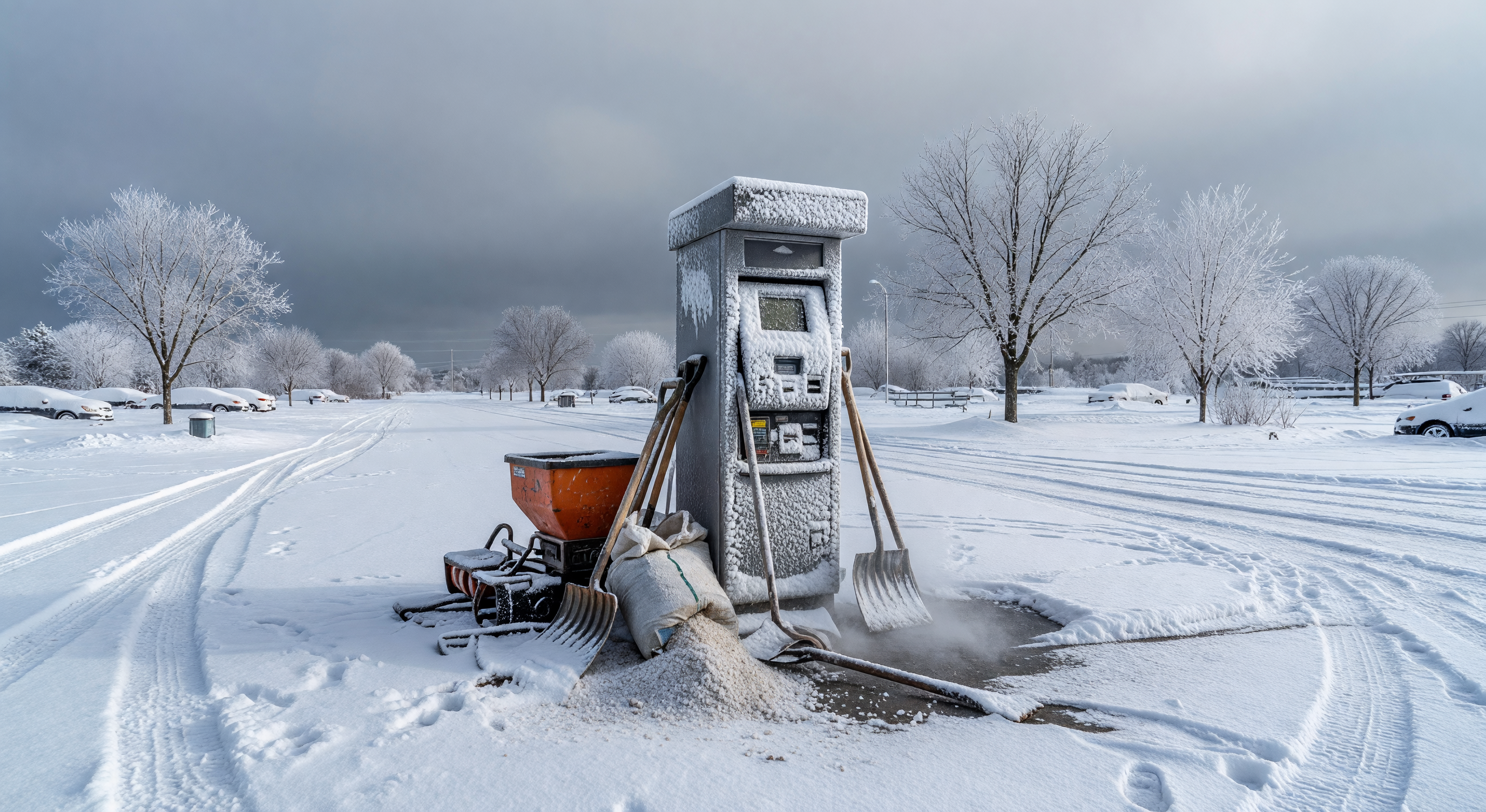
Parking equipment in northern climates faces a specific set of failure modes that don’t appear in temperate environments: frozen bill validators, thermal-contracted loop detector wires, ice-bound gate arm pivot points, and condensation in electrical cabinets that freezes overnight. Facilities that treat winter preparation as an afterthought spend the first cold snap of every season making emergency service calls. Facilities with structured winter protocols maintain uptime through conditions that regularly defeat unprepared equipment.
This guide covers the equipment-specific protocols that prevent cold-weather failures, the preparation steps to complete before the first freeze, and the emergency procedures for common winter failure scenarios.
Pre-Winter Preparation: Before the First Freeze
All Equipment
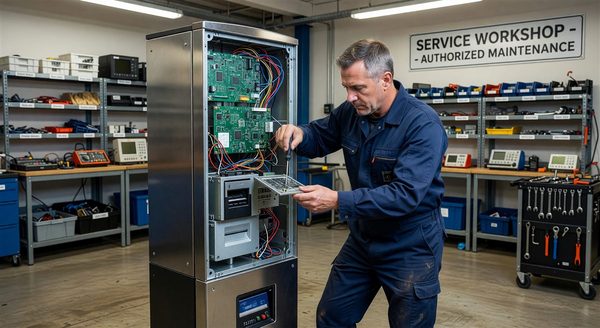
Cabinet inspection and gasket replacement: Cold weather makes failing gaskets a serious problem — moisture that seeps into a cabinet in summer can freeze inside electronics in winter. Before freeze season:
- Open every equipment cabinet and inspect door gaskets
- Replace any gasket showing compression set, cracking, or deformation
- Check that door latches hold the door tight against the gasket
- Inspect cable entry points for adequate sealing
Heater element verification: Most commercial parking equipment includes internal cabinet heaters. Verify that:
- Heaters are operational (feel for heat output after 5 minutes powered on)
- Heater thermostat settings are appropriate for the expected temperature range (typically set to activate below 40°F/4°C)
- Heater wiring connections are secure
- Any heater filter screens are cleaned of dust
Lubrication review: Lubricants used in parking equipment mechanical components thin at low temperatures and thicken at extreme cold — affecting gate motor gearboxes, ticket dispenser mechanisms, and locking systems. Before winter:
- Confirm that lubricants used in all mechanical components are rated for the expected operating temperature range
- Replace any petroleum-based general-purpose lubricants with low-temperature synthetic alternatives if the facility is in a climate where temperatures regularly drop below -10°F (-23°C)
Barrier Gate Winter Protocols
Gate Arm and Pivot Point
Ice accumulation at the arm pivot point is a common winter failure cause. The pivot point collects moisture from snow and rain; when temperatures drop, the pivot can freeze in place — straining the motor attempting to raise the gate.
Prevention:
- Apply a thin coat of low-temperature silicone lubricant to pivot points in November and after any significant thaw-freeze cycle
- Install a pivot point cover if not already present (many manufacturers offer aftermarket covers)
- Keep the immediate cabinet area clear of snow accumulation — snow piled against the cabinet base insulates the cabinet bottom, trapping cold and creating moisture sources
Snow and ice on gate arm: Gate arms accumulate ice and snow weight that strains the motor during the raise cycle. Ice formation on the arm is common during freezing rain events.
Protocol for iced gate arm:
- Do not force the gate motor to operate against an iced arm
- Break ice accumulation manually using a rubber mallet — never pry with metal tools that could dent or crack the arm
- Clear ice from the pivot area before restoring power
- If the gate cannot be cleared safely, place it in manual mode and staff the lane until conditions allow
Gate Motor Cold-Weather Performance
Gate motor performance decreases at extreme cold — motors have rated operating temperature ranges, and below those ranges, motor output decreases and thermal protection may engage. For facilities in climates with sustained temperatures below -20°F (-29°C), verify that gate motors are rated for the expected operating range and consider heated cabinet options from the manufacturer.
Pay Station Winter Protocols
Bill Acceptor and Cash Handling
Bill acceptors are the most cold-weather-sensitive component in outdoor pay stations. The mechanisms use motors, sensors, and transport wheels that perform differently at low temperatures:
Common cold-weather bill acceptor issues:
- Slowed transport speed as motor torque decreases at low temperatures
- Increased rejection rates as cold paper becomes more rigid and less compliant with transport rollers
- Condensation on optical sensors causing false rejection or false jam signals
Prevention:
- Verify cabinet heater is operational before freeze season (covers bill acceptor zone specifically)
- In extremely cold conditions (below 0°F/-18°C), increase PM frequency for bill acceptor cleaning and transport roller inspection
- Keep vault collection current — overfull vaults stress the transport mechanism at normal temperatures; the additional resistance at low temperatures increases jam probability
Thermal receipt paper: Standard thermal receipt paper has a minimum temperature rating below which the paper stops activating properly — resulting in blank or faint receipts. Most commercial thermal paper is rated to 32°F (0°C) for activation; at lower temperatures, receipts may be unreadable.
For facilities in climates with below-freezing receipt printing requirements, specify low-temperature thermal paper (rated to -10°F or lower).
Touchscreen Operation
Capacitive touchscreens require a conductive contact — they typically don’t respond to gloved fingers. Options:
- Specify resistive touchscreens (respond to any pressure, including gloves) for cold-climate installations
- Configure the interface to use hard buttons for key functions (numeric pad, confirmation) rather than relying entirely on touchscreen
- Post signage advising users to use thin gloves or exposed fingers for best touchscreen response
Loop Detector Winter Protocols
Loop detectors in cold climates face two related failure modes:
Thermal contraction cracks: Asphalt contracts in cold; loop wire embedded in asphalt contracts less. The differential movement can open micro-cracks at the asphalt-to-wire interface, introducing moisture and eventually causing continuity failures.
Freeze-thaw cycle damage: Water in pavement cracks expands when freezing, widening cracks and stressing loop wire insulation. After several winters, insulation failures produce intermittent detector behavior that’s difficult to diagnose.
Prevention:
- Seal pavement cracks in the loop area before winter — a well-sealed loop cut is far more resistant to freeze-thaw damage than an open or cracked one
- Use silicone-based loop sealant rather than asphalt emulsion where re-sealing is required (silicone remains flexible at low temperatures; asphalt emulsion becomes brittle)
- Monitor loop detector performance through the first cold spell — intermittent failures in the first hard freeze often indicate wire insulation damage developing from the previous season
Snow plow clearance: Ensure plow operators are aware of loop locations. A plow blade catching the loop saw cut at an angle can sever the loop wire. Mark loop locations on facility maps provided to plow operators and request blade lift at loop crossings.
Ticket Dispenser and Intercom Winter Protocols
Ticket dispenser:
- Paper jams increase in cold weather as paper roll humidity changes and paper curling increases. Increase paper check frequency during cold weather.
- Ticket outlet chutes can collect ice from freezing rain. Daily inspection and clearing of ice from the ticket exit slot prevents complete blockage.
Intercom:
- Speaker membranes can stiffen or freeze in extreme cold, affecting audio quality
- Verify intercom audio both from the field unit and the answer station after the first severe cold event
- External push buttons and call activation mechanisms are susceptible to ice jam — clear ice from button assemblies during daily inspection
Emergency Winter Procedures
Gate Inoperable Due to Ice or Snow
- Switch gate to full-open or manual mode
- Station staff or cones at the lane entry to manage access
- Document the time the gate was taken out of service
- Call for emergency maintenance support
- Do not attempt to force the gate motor against frozen components — doing so risks motor damage that converts a frozen-gate situation into a motor replacement situation
Pay Station Out of Service
- Activate fee waiver or grace period if your PARCS system supports it
- Place an “Out of Service” notice on the unit with a customer service contact
- Direct customers to the nearest alternate payment station
- Log the incident and contact service dispatch
Frequently Asked Questions
At what temperature does parking equipment start experiencing cold-related failures? Most commercial parking equipment is rated to -4°F (-20°C) operating temperature. Problems typically begin at temperatures approaching the lower edge of the operating range, but inadequate cabinet heating, moisture intrusion, or component wear can cause issues at milder temperatures.
Should we cover parking pay stations in winter? No — covers trap moisture and prevent the cabinet’s designed ventilation from functioning. Cabinet heaters and weatherproof enclosures are the appropriate cold-weather protection, not external covers.
How often should we check parking equipment during a severe winter storm? During active severe weather (heavy snow, freezing rain, sustained temperatures below -10°F), daily inspections are appropriate. Focus on gate arm ice accumulation, pay station bill acceptor status, and ticket outlet clearance.
Is there a cost-effective way to heat gate arm pivot points in very cold climates? Heat tape — electrical resistance tape applied at the pivot point area — is available for parking gate applications. It’s thermostatically controlled and draws minimal power. This is a cost-effective solution for facilities with chronic pivot-freeze problems in sustained cold conditions.
Key Takeaway
Winter parking equipment failures are largely preventable with the right preparation. A four-hour pre-season inspection and preparation sweep — verifying heaters, lubricating pivot points, inspecting gaskets, and checking thermal paper stock — prevents the majority of cold-weather service calls. Prepare before the first freeze, not after the first failure.