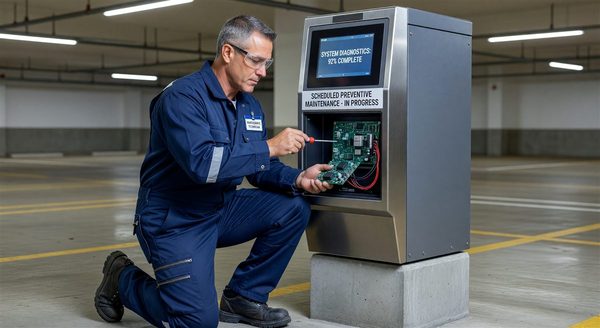
Preventive maintenance is the difference between equipment failures that are anticipated and managed, and equipment failures that cause operational crises. A comprehensive PM program doesn’t eliminate failures — but it dramatically reduces their frequency, shortens their duration, and shifts them from unexpected emergencies to planned events.
This checklist provides a complete PM framework organized by frequency interval. Adapt the specific tasks to your equipment manufacturers’ recommendations — this checklist covers standard commercial parking equipment; proprietary or specialized equipment may have additional requirements.
Daily Checks (Operational Inspection)
Daily inspections should be completed by facility staff during opening procedures. They require no tools and take 15–30 minutes for a typical facility.
Barrier Gates
- Gate arms in correct closed position (not sagging, drifting, or binding)
- Gate cycles correctly on loop/ticket trigger (open and close one test cycle)
- Safety loop/IR sensor functioning (wave hand or use test object under gate — gate should open on closing cycle)
- Gate motor sound normal (no grinding, clicking, or unusual noise)
- Cabinet exterior — no visible damage, vandalism, or vehicle impact
- Snow/ice clearance at gate arm and cabinet base (winter)
Pay Stations
- Station powered and displaying correctly
- Run a test transaction (if your system supports zero-dollar test)
- Check paper remaining in receipt printer
- Check bill acceptor vault level (not approaching capacity)
- Check coin vault level if applicable
- Check display for error messages or alerts
- Inspect exterior for vandalism or damage
Ticket Dispensers
- Ticket stock present and loading correctly
- Print quality on last few tickets (no fading, no paper jams)
- Loop detector triggering dispenser correctly
Intercoms
- Test audio at each intercom location
- Verify call routes to correct answering station
- Speaker grille clear of debris
Cameras
- Verify camera feeds active in VMS (no offline cameras)
- Review any overnight motion alerts
- Clear debris from camera domes or lenses if accessible
Weekly Checks
Weekly maintenance takes 1–2 hours and requires basic tools (screwdrivers, multimeter).
Barrier Gates
- Inspect gate arm for stress cracks, especially at mount collar
- Check arm pivot point for smooth operation — apply lubrication if stiff
- Cycle gate manually (using manual release) to verify smooth mechanical operation independent of electronics
- Check loop detector sensitivity — briefly test with a small metal object if sensitivity concerns exist
- Inspect cabinet bottom for moisture or water pooling
- Verify all cabinet fasteners are secure
Pay Stations
- Run cash reconciliation — compare physical count against transaction log
- Clean touchscreen or display glass
- Test all payment methods (card, contactless, cash) with a test transaction
- Inspect coin mechanism for jams or worn parts
- Clean thermal receipt printer head with cleaning card (or per monthly schedule if manufacturer-recommended)
- Check paper roll — replace if below the minimum reorder diameter
Access Control
- Test each credential type (RFID card, fob, plate) at each reader
- Verify access log is recording correctly
- Review any access denial events that may indicate credential or reader issues
Monthly Maintenance
Monthly maintenance is typically performed by facility staff or a service technician. Plan 2–4 hours for a standard facility.
Barrier Gates
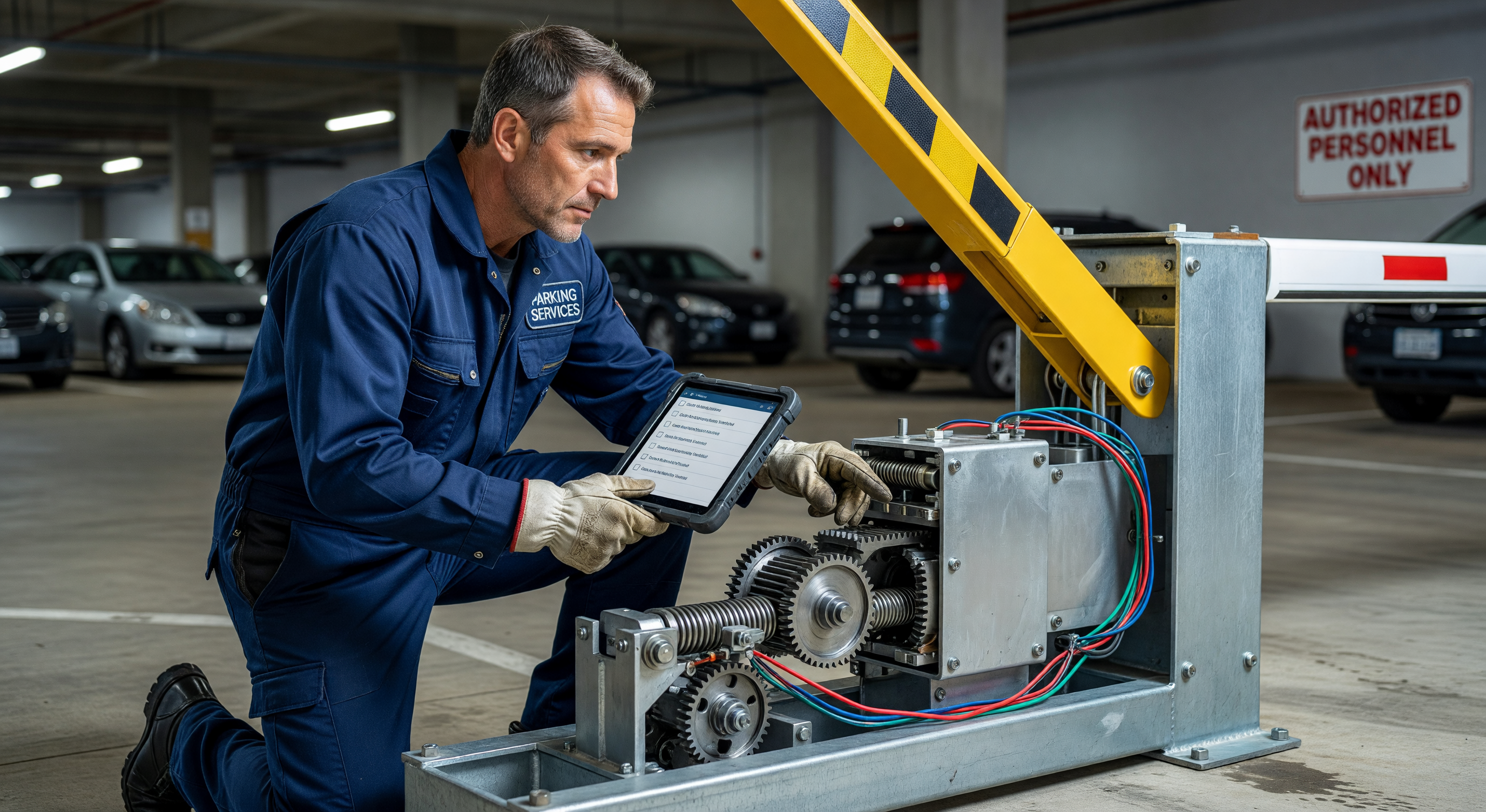
- Lubricate all pivot points, hinge points, and moving mechanical components per manufacturer specification
- Inspect and test motor operation at all cycle speeds if variable speed control is available
- Check gearbox for unusual play or noise
- Inspect cable connections in cabinet for tightness and corrosion
- Test interlock systems (exit loop, safety loop, anti-crash sensors)
- Check gate arm counterweight alignment and security (if applicable)
Pay Stations
- Full bill acceptor transport path cleaning (see bill acceptor maintenance guide for procedure)
- Clean coin transport mechanism if present
- Inspect and clean all external payment interfaces (card reader slot, NFC reader area)
- Verify vault security — check vault door lock mechanism and door seal
- Test all receipt options (print, email, SMS) for correct function
- Verify transaction log continuity — look for gaps that might indicate connectivity interruptions
Cameras and Detection
- Clean all camera domes and lens windows
- Verify recording is active and storage is not approaching capacity
- Spot-check playback from 5–7 days prior to verify recording quality
- Clean loop detector terminal connections if accessible
Intercom
- Test all call paths including after-hours routing
- Clean microphone opening with compressed air
- Verify audio quality in both directions (field to master, master to field)
Quarterly Maintenance
Quarterly maintenance is typically performed by a service technician. Plan 4–8 hours per visit depending on facility size.
Barrier Gates
- Inspect gate motor brushes (DC motors) — replace if below manufacturer minimum
- Test gate motor current draw and compare to baseline (elevated current indicates mechanical issue)
- Inspect loop detector electronics — check Q factor and inductance against baseline
- Check loop wire continuity and resistance at detector terminals
- Inspect and test all safety devices (safety edges, presence sensors, loop detectors)
- Verify gate speed settings against original specifications
- Check and tighten all structural mounting bolts
Pay Stations
- Deep clean all interior components — remove and inspect all removable modules
- Inspect bill acceptor feed rollers — replace if worn or glazed
- Test coin hopper (if present) — verify correct dispensing count
- Inspect and test thermal print head — check resistance, inspect element surface
- Verify ADA compliance of current configuration — reach ranges, audio output
- Review rate structure for accuracy against current pricing
Access Control Equipment
- Inspect RFID reader antenna connections
- Test access control software failover (offline mode functionality)
- Audit access credentials — deactivate credentials for departed employees or former permit holders
- Verify anti-passback configuration is functioning correctly
- Test emergency release mechanisms
Cameras and Detection
- Full camera coverage test — walk all coverage areas and verify no blind spots
- Test motion detection zones in VMS — verify zones are triggering appropriately
- Inspect all camera mounting hardware for corrosion or loosening
- Verify NVR/DVR storage and confirm oldest footage is at the correct retention date
- Test remote access to camera system
Annual Maintenance
Annual maintenance should be performed by factory-trained technicians or authorized service providers. Plan a full day or multi-day visit for a complete facility.
Barrier Gates
- Full gate motor inspection — bearings, brushes (DC), windings
- Gearbox oil inspection and replacement if applicable
- Full mechanical cycle test at specified speeds under load
- Cabinet weatherproofing inspection — gaskets, seals, and cable entry points
- Annual load test of gate motor under maximum specified arm weight
- Review and update gate motor service records
Pay Stations
- Payment certification verification — confirm EMV certification currency
- Full payment processing audit — test all payment types and verify settlement
- Bill acceptor calibration and firmware update
- Annual PCI compliance review — verify software and hardware meet current PCI requirements
- Vault and lock cylinder inspection — replace if showing wear
- Full audit of all internal cable connections
System-Wide
- Review all service records from the past year — identify high-failure equipment and develop replacement plan
- Update spare parts inventory based on 12-month consumption
- Review PARCS software version — apply any pending updates
- Verify all system integrations are functioning — payment gateway, PARCS, mobile payment, property management
- Annual fire safety inspection of all equipment cabinets
Frequently Asked Questions
Should we use facility staff or a service contractor for preventive maintenance? Daily and weekly inspections are appropriate for trained facility staff — they require observation and basic maintenance skills rather than specialized technical knowledge. Monthly and quarterly PM is best performed by technically trained staff or service contractors with equipment-specific knowledge. Annual PM typically requires manufacturer-trained technicians.
What documentation should be kept from PM visits? At minimum: date, technician, equipment, tasks performed, findings, and any parts replaced. This documentation supports warranty claims, identifies trending failure patterns, and provides the data needed for lifecycle and repair-vs-replace decisions.
How do we get staff to actually complete daily checks consistently? Build daily checks into shift start procedure with a signed checklist. Digital PM apps that require a signature or photo at each check step increase accountability. Tie equipment failure patterns to PM compliance — showing staff that the equipment failures on their shifts are traceable to missed PM creates motivation better than policy alone.
What’s the cost of a comprehensive PM program vs. reactive maintenance? Facilities with consistent PM programs typically spend 30–50% less on total maintenance costs than reactive-only facilities. The savings come from reduced emergency service call premiums, fewer consequential failures (failures that damage other components), and longer equipment lifespans.
Key Takeaway
A PM checklist is only valuable if it’s actually followed. The most important aspects of a PM program are consistency and documentation — not perfection on any single visit. Build the program around what your staff and budget can sustain consistently, then expand from there.