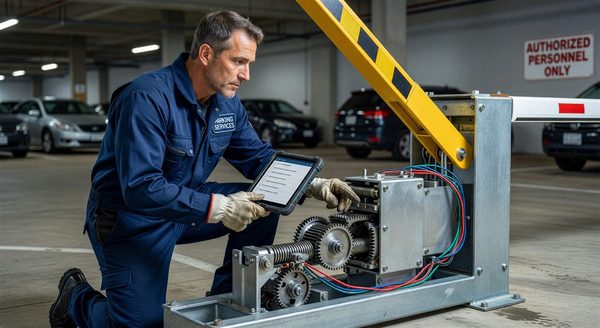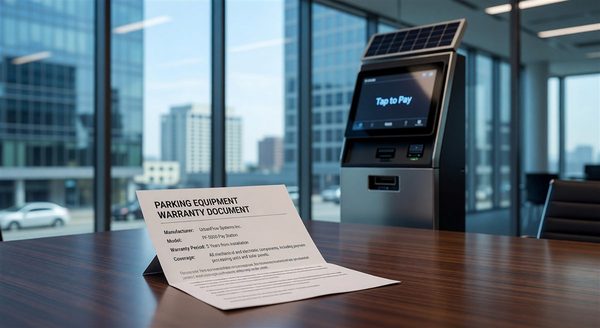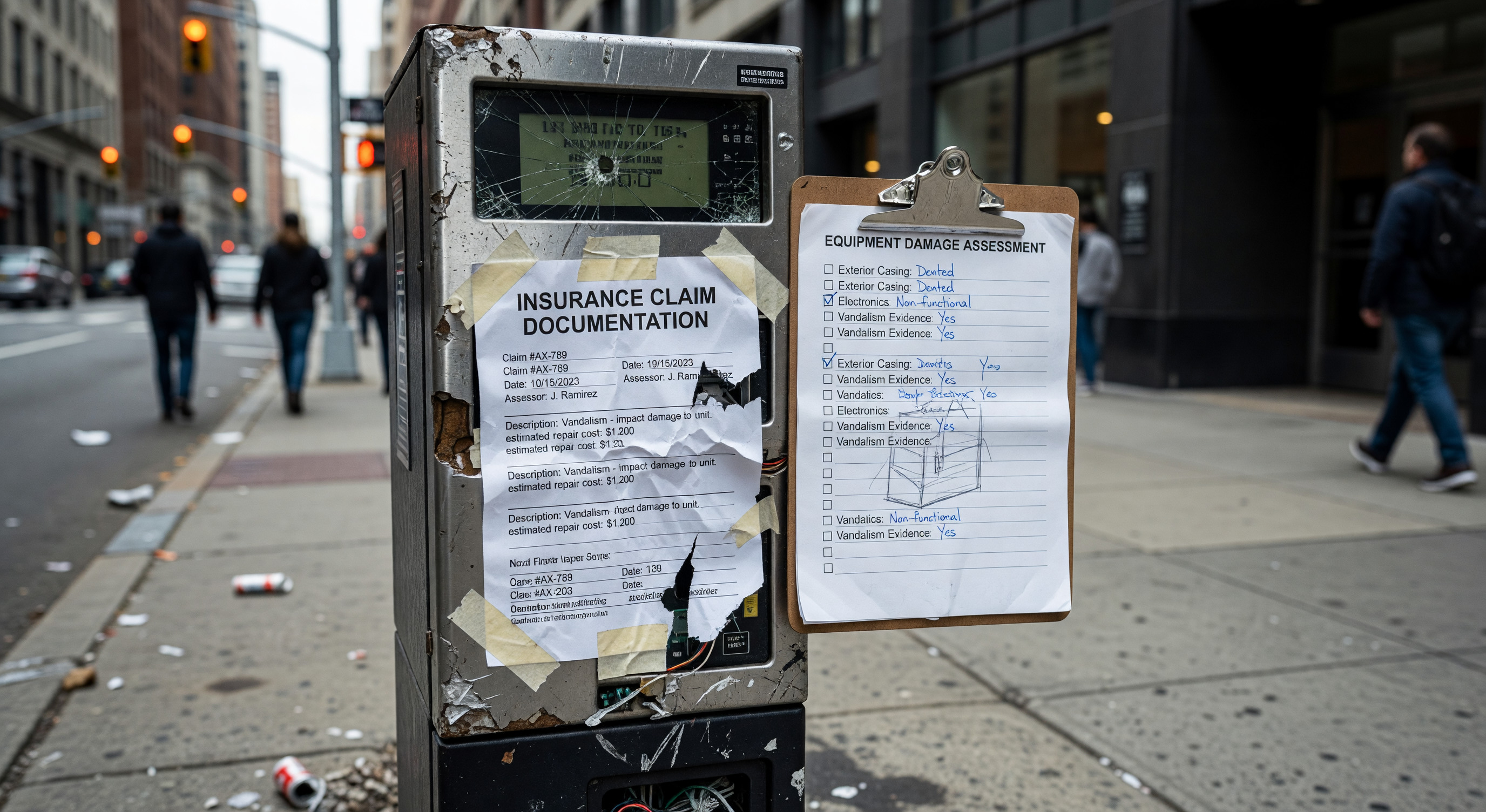
Vehicle collisions with parking equipment are a regular occurrence in operating facilities. Barrier gates, pay stations, and structural components are struck by distracted drivers, oversized vehicles, and mechanical failures that direct vehicles into equipment. When this happens, the insurance claim process is often where facilities recover (or fail to recover) the full replacement cost.
Poor documentation, delayed reporting, and unfamiliarity with insurance claim procedures are the primary reasons facilities receive settlements below actual damage costs. This guide covers the documentation practices, claim procedures, and negotiation considerations that produce better insurance outcomes.
Types of Insurance Coverage Relevant to Parking Equipment
Property Insurance
Standard commercial property insurance covers damage to equipment and structures from covered perils — typically vehicle collision, vandalism, fire, and certain weather events. Parking equipment is covered as personal property (moveable equipment) or fixtures (permanently installed equipment) depending on how it’s classified.
Key coverage questions:
- Is parking equipment explicitly listed or scheduled, or covered under blanket personal property coverage?
- What is the valuation basis: actual cash value (ACV) or replacement cost value (RCV)?
- What is the deductible per occurrence?
ACV vs. RCV: This distinction significantly affects claim outcomes. Actual cash value applies depreciation — a 5-year-old pay station with a $9,000 replacement cost may have an ACV of $4,500 after depreciation. Replacement cost coverage pays the full replacement cost regardless of depreciation. Review your policy language and confirm which applies to parking equipment.
General Liability Insurance
When a vehicle collision damages parking equipment and also causes injury or damage to a third party (another vehicle, a pedestrian), general liability coverage is implicated. Liability claims are significantly more complex than property claims.
Automobile Insurance (Third Party)
When a driver’s vehicle damages your parking equipment, the driver’s automobile liability insurance is the primary recovery mechanism. Your property insurance will typically cover the loss and subrogate (seek reimbursement) against the at-fault driver’s insurance.
Important: Never release a driver from the scene of an equipment collision without obtaining their insurance information. Many facilities have experienced significant difficulty recovering from drivers who left the scene.
Immediate Post-Incident Documentation
The documentation collected in the first 30–60 minutes after an incident determines the quality of the insurance claim.
Scene Documentation
Photograph everything before any equipment is moved or temporary repairs are made:
- Wide shots showing the overall scene from multiple angles
- Close-up photos of each damaged component
- The vehicle that caused the damage (if still present) — full vehicle including license plate, all four sides
- Point of impact — where the vehicle contacted the equipment
- Any secondary damage caused by the incident (other equipment, pavement, signage)
- Environmental conditions (lighting, weather, time of day)
- Any warning or safety markings visible in the scene
Video documentation: A 60-90 second video walk-around of the scene captures context that still photos miss. Use your phone; video quality is less important than completeness.
Extract camera footage immediately: Before any other actions, extract the camera footage from your VMS covering the incident. Most camera systems overwrite on a rolling basis — footage from a busy facility may be overwritten within days. Export and secure the footage on an isolated storage device.
Witness and Driver Information
From the at-fault driver (if present):
- Full legal name
- Driver’s license number and state
- Vehicle make, model, year, and license plate
- Insurance company and policy number
- Contact phone number
From witnesses:
- Name and contact information
- Brief statement of what they observed
Equipment Damage Documentation
For each damaged component:
- Equipment make, model, and serial number
- Description of damage (specific components affected)
- Photographs as described above
- Note whether the equipment is fully inoperable or partially functional
Reporting Requirements and Timelines
Police Report
For incidents involving significant equipment damage (typically over $500) or for incidents involving a driver who is uncooperative or leaves the scene, file a police report. A police report number is required for many insurance claims and provides independent documentation of the incident.
Insurance Policy Reporting Requirements
Most property insurance policies require prompt reporting of covered losses — typically within 24–72 hours of discovery. Review your policy for the specific reporting requirement and comply with it strictly. Late reporting can jeopardize coverage.
Contact your insurance broker or agent immediately after documenting the scene. Provide: date, time, location, brief description of what occurred, and the extent of visible damage. Your insurer will assign a claim number and advise on next steps.
Driver’s Insurance
File a claim with the at-fault driver’s automobile insurance as well. Obtain their claim number. Your property insurer will coordinate with the at-fault driver’s insurer; this coordination is called subrogation.
Working with Adjusters
Insurance adjusters assess the damage and determine the settlement amount. Being prepared for this process significantly affects outcomes.
Preparing for the Adjuster’s Visit
Compile the following before the adjuster arrives:
- Complete documentation package (photos, video, police report)
- Equipment serial numbers and purchase documentation or invoices
- Replacement cost quotes from equipment suppliers (get two or three quotes)
- Maintenance records showing equipment was in good condition before the incident
- Operational impact documentation: hours the equipment was out of service, revenue impact
Get replacement cost quotes before the adjuster’s visit, not after. The adjuster will use their own cost estimates if you don’t provide specific quotes. Independent quotes from your actual equipment suppliers are the strongest basis for a replacement cost claim.
What Adjusters Commonly Challenge
Depreciation disputes: On ACV policies, adjusters may apply aggressive depreciation schedules. Parking equipment in good condition, properly maintained, can have significant remaining useful life that isn’t fully reflected in generic depreciation schedules. Document maintenance history to support lower depreciation.
Scope of damage: Adjusters may initially underestimate the scope of damage — what’s visible on the surface doesn’t always capture internal component damage from impact forces. Request that the adjuster approve disassembly of damaged equipment for full inspection before accepting any settlement.
Code upgrade costs: If damaged equipment must be replaced with current-code-compliant equipment that differs from the original (ADA updates, payment certification requirements), the cost difference may be covered under a code upgrade endorsement. Verify this with your broker.
Recovery from Uninsured or Underinsured Incidents
When the at-fault driver is uninsured, underinsured, or unidentified (hit-and-run), options include:
Your property insurance: Covers the damage (minus deductible) regardless of whether the at-fault driver is insured. Your insurer pursues recovery from the at-fault party.
Civil recovery: For identified drivers who are uninsured and whose insurance doesn’t fully cover the loss, civil judgment (small claims court for smaller amounts, civil court for larger) may be an option. The challenge is that an uninsured driver often lacks the assets to satisfy a judgment.
Security footage for hit-and-run identification: Camera footage of a hit-and-run vehicle (including license plate from LPR or standard cameras) can provide a basis for identification and subsequent insurance or civil recovery.
Insurance and Maintenance Records: The Connection
Well-maintained equipment with documented maintenance records supports insurance claims in two ways:
- It establishes that the equipment was in good condition before the incident (reducing depreciation in ACV claims)
- It supports the argument that damage is incident-caused rather than pre-existing deterioration
Maintain equipment service records in a format that can be presented to an adjuster: dates of service, work performed, and any relevant condition observations. A maintenance log that shows regular service through the date before an incident is valuable documentation.
Frequently Asked Questions
How long does a parking equipment insurance claim typically take to resolve? Simple property damage claims with good documentation resolve in 2–6 weeks. Complex claims involving liability questions, significant damage scope, or dispute over value may take 3–6 months. Providing complete documentation upfront accelerates the process.
Should we make temporary repairs before the adjuster visits? Safety-related temporary repairs (securing the gate in open or closed position, covering sharp edges, protecting the public from the damage area) are appropriate and don’t jeopardize the claim. Document the condition before making any temporary repairs. Permanent repairs before adjuster inspection may complicate the claim.
Can we negotiate the adjuster’s initial settlement offer? Yes. Initial settlement offers are often starting points, not final numbers. If the adjuster’s valuation doesn’t match your actual replacement cost, provide documentation supporting your number and request reconsideration. If the dispute can’t be resolved, most policies have an appraisal or arbitration process.
What is subrogation and how does it affect our claim? Subrogation is the process by which your insurer, after paying your claim, pursues recovery from the at-fault party’s insurer. From your perspective, your claim is paid and you receive the settlement; your insurer handles the recovery. Subrogation may affect whether your deductible is eventually refunded to you if your insurer fully recovers from the at-fault party.
Key Takeaway
Insurance claim outcomes for parking equipment damage are directly proportional to documentation quality. The facilities that receive full replacement cost settlements document the scene thoroughly, obtain their own repair quotes before the adjuster visit, and engage actively in the settlement negotiation. Passive acceptance of initial adjuster estimates routinely produces under-settlement.