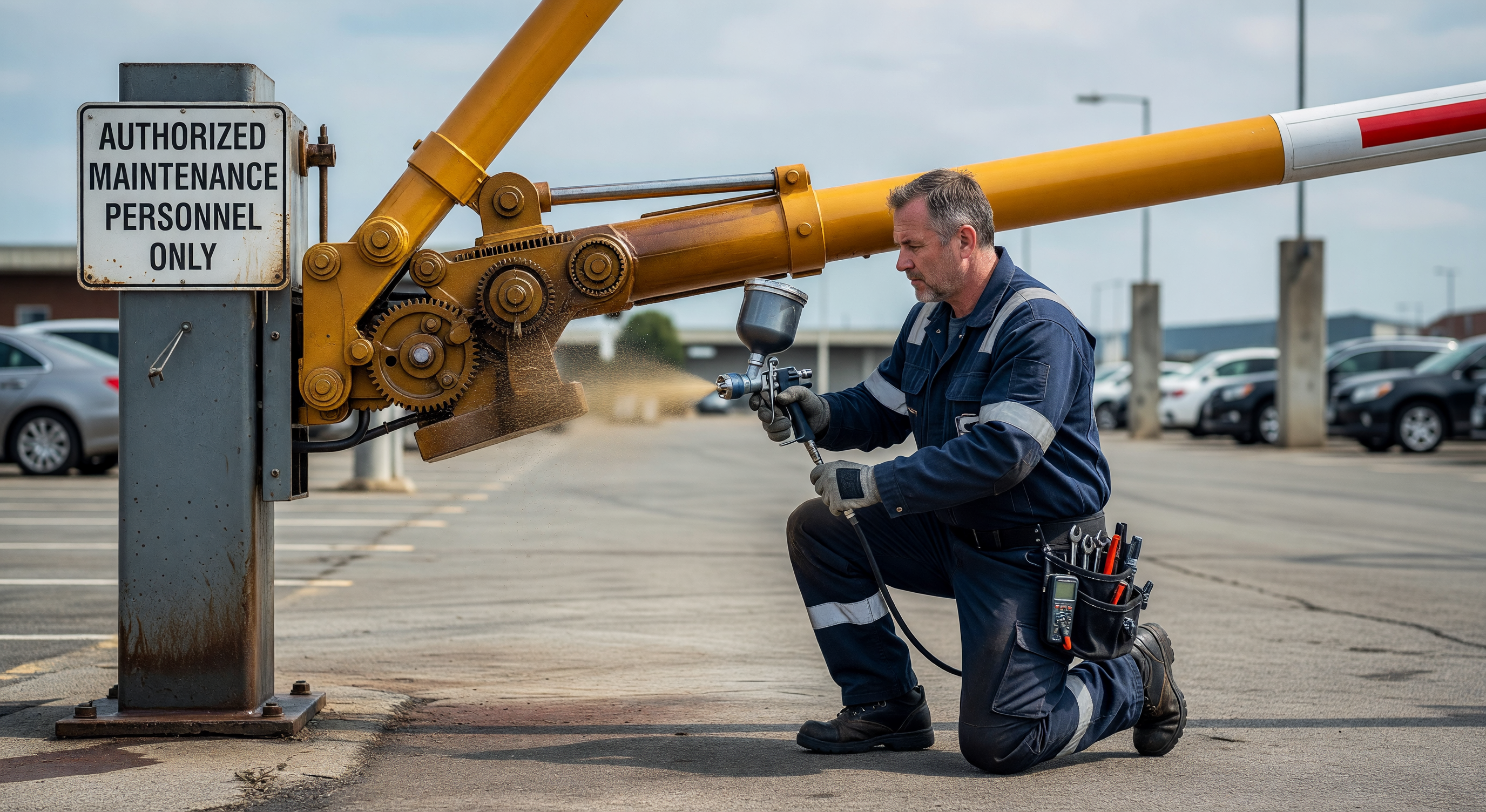
Parking equipment in coastal environments and northern cities with road salt programs faces an accelerated failure timeline compared to the same equipment in temperate, dry climates. The difference isn’t small — corrosion failures in high-salt environments can occur within 3 years for equipment specified for general outdoor use, while equipment specified and maintained for the environment lasts 15+ years.
The good news is that corrosion-induced failures are almost entirely preventable through material selection, surface treatment, maintenance, and environmental design decisions that are most cost-effective when made during procurement rather than retrofit.
The Corrosion Mechanisms at Work
Understanding what causes corrosion in parking equipment helps select the right countermeasures.
Salt and Chloride Attack
In coastal environments, airborne salt spray and in winter environments, road de-icing salts (primarily sodium chloride and calcium chloride) create an electrolyte solution on metal surfaces. This electrolyte enables electrochemical corrosion — the mechanism that rusts steel and attacks aluminum.
Chloride ions are particularly aggressive corrosion initiators. They penetrate protective oxide layers on aluminum, break down powder coat adhesion on steel, and cause pitting corrosion that undermines structural integrity faster than general surface rust.
Distance from salt sources matters: Coastal facilities within 1,000 feet of the ocean face the highest salt exposure. Facilities within a mile see meaningful but lower exposure. In winter salt environments, equipment at road level within splash distance of heavily salted lanes faces much higher salt exposure than elevated or sheltered equipment.
Galvanic Corrosion
When two dissimilar metals are in electrical contact in a conductive medium (water with dissolved salts), the less noble metal corrodes preferentially. Common parking equipment galvanic problems:
- Steel fasteners in aluminum housings
- Copper ground wires in contact with aluminum enclosures
- Stainless steel bolts against unpainted carbon steel frames
Galvanic corrosion can be more aggressive than general corrosion because it concentrates at specific contact points, causing deep pitting rather than surface rust.
Crevice Corrosion
Corrosion that concentrates in gaps, seams, and overlapping surfaces — anywhere an electrolyte solution can pool and stagnate. Parking equipment cabinet seams, mounting bracket overlaps, and bolt holes are common crevice corrosion sites.
Material Selection for Corrosive Environments
Housing Materials
Stainless steel (316 grade): The highest corrosion resistance for equipment housings. Marine-grade 316 stainless contains molybdenum that significantly improves resistance to chloride pitting. Weight penalty and cost premium over aluminum: 20–40%. Appropriate for direct coastal and extreme salt environments.
Stainless steel (304 grade): Adequate corrosion resistance for inland winter salt environments; not sufficient for direct coastal or marine environments. Common in food service equipment; applicable to parking equipment in non-coastal high-salt environments.
Aluminum (anodized): Anodizing creates an aluminum oxide layer that significantly improves corrosion resistance over bare or painted aluminum. Marine-grade anodizing (hard coat, sealed) is appropriate for coastal installations. Specify the anodizing type and thickness in procurement documents.
Aluminum (powder coated): Powder coat provides good corrosion protection when the coating is intact and well-adhered. The failure mode is edge chipping or impact damage that exposes bare aluminum — which then corrodes under the surrounding intact coating. For coastal environments, powder coat over properly prepared aluminum with a chromate conversion primer significantly extends coating life.
Fiberglass and composite housings: Non-conductive, non-corrosive, and lightweight. Some payment equipment uses composite housings specifically for corrosive environments. The limitation is impact resistance — composites may be less impact-resistant than metal housings at equivalent cost.
Fasteners and Hardware
All exposed fasteners in corrosive environments should be:
- 316 stainless steel for direct coastal exposure
- 304 stainless steel for inland high-salt environments
- Isolation bushings where stainless fasteners contact aluminum to prevent galvanic contact
Never use zinc-plated or cadmium-plated steel fasteners in salt environments — zinc and cadmium coatings fail quickly and leave exposed steel that corrodes rapidly.
Internal Electronics Protection
Electronic circuit boards within parking equipment benefit from:
- Conformal coating: A thin polymer coating applied to circuit boards that protects against moisture and conductive contamination. Specify conformal-coated boards for coastal and high-humidity environments.
- Sealed connectors: Connectors with IP-rated sealing prevent moisture ingress at cable connection points — a common failure location for internal electronics
Protective Coating Systems
Powder Coat Specification
For equipment where powder coat is the primary protection (aluminum or steel housings):
- Surface preparation: Sandblast or chemical etch to Sa 2.5 or equivalent before coating. Poor surface prep is the primary cause of early coating failure.
- Primer: Chromate conversion coating (Alodine or equivalent) on aluminum before powder coating provides additional corrosion protection and improves adhesion.
- Coating thickness: Minimum 3 mils (75 microns) dry film thickness; 4–5 mils for high-exposure environments.
- Specification: ASTM B117 salt spray testing (500-hour minimum, 1,000-hour preferred for coastal) validates coating quality.
Touch-Up and Repair
Powder coat damage (chips, scratches, edge damage) should be repaired promptly in corrosive environments. Options:
- Touch-up paint pen (manufacturer-matched color, single-component) for minor chips
- Two-part epoxy primer plus topcoat for larger damage areas
- Professional re-coating for extensive damage (removing all coating and reapplying)
Unpaired chip damage on coastal equipment progresses from a small chip to significant undercutting of surrounding coating within one to two seasons. Early repair prevents progressive damage.
Maintenance Protocols for Corrosive Environments
Regular Washing
Salt accumulation on equipment surfaces is the primary corrosion driver that maintenance can address. Regular washing removes salt before it can initiate corrosion.
Frequency:
- Coastal equipment (within 1,000 feet of ocean): Monthly washing minimum; after storm events
- Winter salt environments: Washing after each significant salt application event during winter season
- Spring wash: Full equipment cleaning after winter salt season ends — this is the most important annual wash event
Washing procedure:
- Use fresh water only for regular washing — no cleaners that could damage coating
- Rinse from top to bottom; pay attention to seams, gaps, and crevices where salt accumulates
- After washing, inspect for chip damage that warrants touch-up
- Dry accessible surfaces to remove standing water from horizontal surfaces
Annual Inspection Protocol
Once annually, perform a systematic corrosion inspection:
- Inspect all housing seams for corrosion initiation (white powdering on aluminum, red rust on steel)
- Check all external fasteners for corrosion — replace any showing significant oxidation
- Inspect mounting hardware and brackets — corrosion often starts at mounting points where water pools and coating is stressed
- Open cabinets and inspect interior for moisture intrusion evidence (water staining, corroded internal hardware)
- Document findings with photos for trend tracking
Specification Language for Procurement
When specifying parking equipment for corrosive environments, include explicit requirements:
- Housing material and grade: e.g., “316 stainless steel housing with welded seams”
- Coating specification: e.g., “Chromate conversion primer + polyester powder coat, minimum 4 mils DFT, 1,000-hour ASTM B117 salt spray resistance”
- Fastener specification: “All external fasteners to be 316 stainless steel with non-conductive isolation bushings at dissimilar metal contacts”
- Electronics protection: “Circuit boards with conformal coating per IPC-CC-830; all external connectors with IP66 sealing”
Vague specifications like “suitable for outdoor use” or “weatherproof” do not ensure adequate corrosion protection in high-salt environments. Explicit material and testing specifications do.
Frequently Asked Questions
How do I know if my facility qualifies as a coastal environment? The standard reference is ASTM B117 salt spray testing classifications. Facilities within a quarter mile of ocean shoreline are generally classified as marine environments. Facilities between a quarter mile and one mile face moderate salt exposure. Your equipment supplier can recommend appropriate specifications based on facility distance from the coast.
Does powder coat replacement restore full corrosion protection? Properly done, yes. The key requirement is complete removal of all existing coating and any corroded surface material before recoating. Coating applied over active corrosion provides only temporary protection. Professional coating restoration restores original protection levels.
Should we specify differently for underground parking near coastal areas? Underground parking reduces direct salt spray exposure but increases humidity exposure, which drives a different corrosion pattern (general oxidation rather than chloride pitting). For underground coastal installations, specify corrosion-resistant materials and adequate ventilation rather than focusing on salt spray ratings.
How long does conformal coating on circuit boards last? Conformal coating is a permanent barrier that doesn’t wear out under normal conditions. Physical damage (scraping, chemical exposure) or thermal cycling can cause delamination over many years. Circuit board replacement due to conformal coating failure is unusual in properly specified equipment; the boards typically fail from other causes before the coating does.
Key Takeaway
Corrosion protection for parking equipment in salt environments is most cost-effective when addressed through procurement specifications rather than reactive maintenance. The incremental cost of specifying 316 stainless hardware and proper surface coatings at purchase is far lower than the cost of premature equipment replacement or intensive ongoing maintenance to manage corrosion on inadequately specified equipment.