Parking facilities present one of the toughest environments for video surveillance: wide open spaces, high contrast lighting (direct sun vs. deep shade), extreme temperature swings, vandalism exposure, and the need to capture usable license plate images from moving vehicles. Picking the wrong camera type — or the right camera with inadequate specs — results in footage that looks fine until you actually need to use it as evidence.
This guide covers what matters for parking-specific deployments: camera type selection, resolution requirements for evidence and plate capture, low-light performance, IP ratings for outdoor durability, storage calculations, and integration with access control.
Camera Types and Where Each Belongs
Dome Cameras
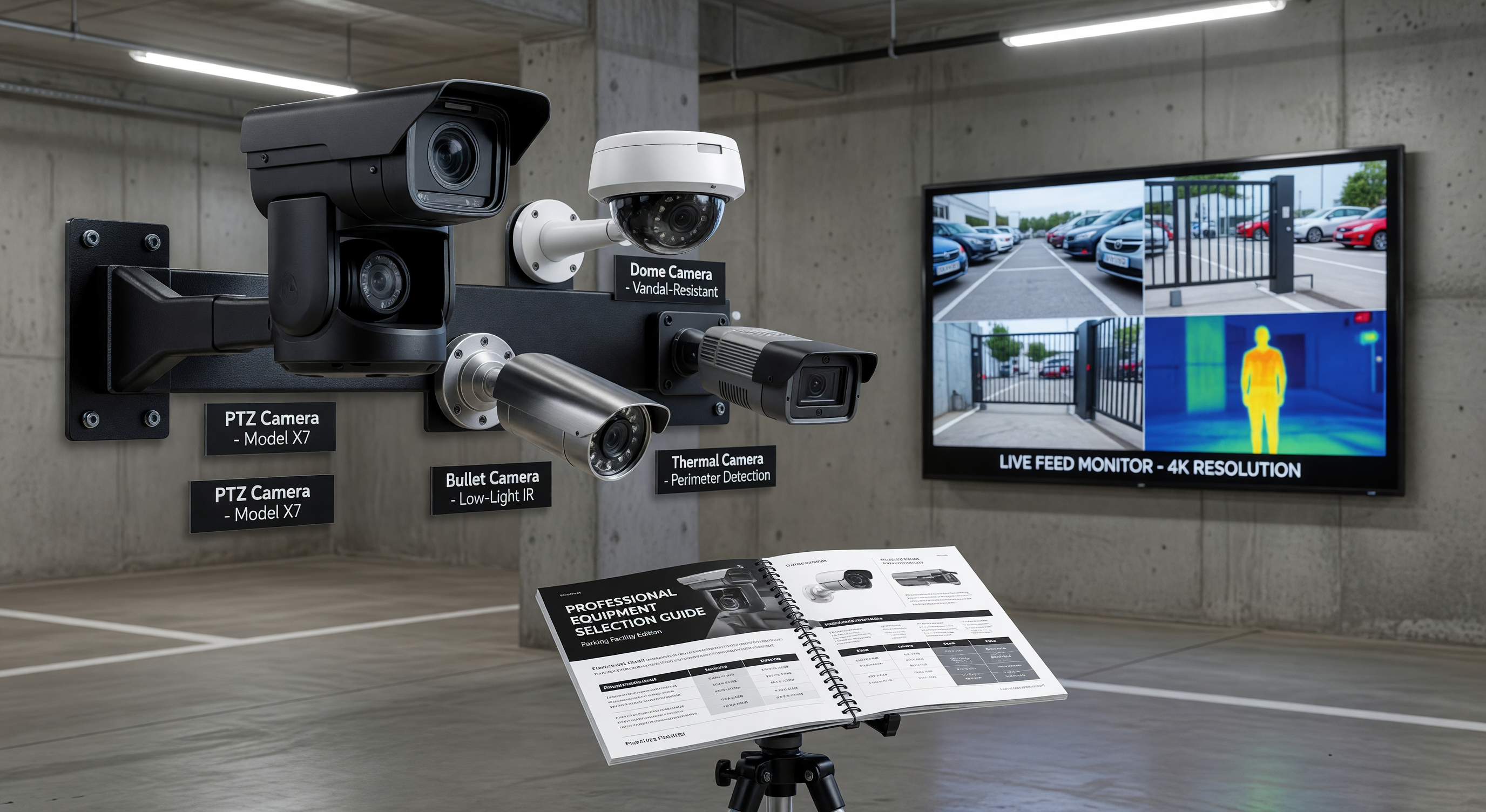
Dome cameras house the lens in a vandal-resistant dome housing, typically mounted flush to ceilings or overhead structures. The dome design obscures lens direction, which is a deterrent advantage — it’s hard to tell exactly where the camera is pointed.
Best for: Covered garages, stairwells, elevator lobbies, pay station areas, and any indoor zone where aesthetics matter and vandalism risk is high.
Spec range: Most commercial domes offer 1080p–4K resolution, 2.8mm–12mm varifocal lenses, and IK10 vandal resistance (can withstand a 20-joule impact). Look for IP66 or higher for any partially exposed location.
Limitations: Fixed domes have a limited field of view (typically 90°–110°). Wide-angle domes reduce detail per pixel. Not ideal for long-distance coverage or license plate capture beyond 30–40 feet.
Bullet Cameras
Bullet cameras are cylindrical, externally mounted, and designed for directional coverage at distance. The housing allows longer focal length lenses, making them the standard choice for lane entries, exit points, and perimeter coverage.
Best for: Entry/exit lanes, driveways, perimeter fencing, surface lot coverage, and anywhere you need to capture detail at 50–150 feet.
Spec range: Commercial bullets typically run 1080p–4K with motorized varifocal lenses (2.8–12mm or 5–50mm for long-range). IR range extends to 100–200 feet on mid-tier units. IP66/IP67 ratings are standard. Expect operating temperature ranges of -40°F to 140°F on quality outdoor units.
Limitations: Visible mounting makes them a vandalism target on low-traffic surfaces. The fixed position means coverage gaps if not placed carefully.
PTZ Cameras (Pan-Tilt-Zoom)
PTZ cameras allow remote operators to pan, tilt, and optically zoom — making them active monitoring tools rather than passive recorders. A single PTZ can cover the footprint of 4–6 fixed cameras when actively monitored.
Best for: Large surface lots, incident response, facilities with live monitoring staff, and situations where post-incident zoom-in capability matters.
Spec range: Entry PTZs start around $800–$1,500 with 20x optical zoom. Commercial units ($2,000–$5,000) add 30x–40x optical zoom, 360° continuous rotation, and auto-tracking. Enterprise PTZs ($5,000+) include thermal imaging, laser illuminators (600+ foot range), and sophisticated analytics.
Limitations: High cost per unit. Requires active monitoring or preset tours to be effective. If no one is watching the live feed, a PTZ provides no more coverage than a fixed camera on its current position.
Fisheye/360° Cameras
Fisheye cameras use ultra-wide lenses (typically 180°–360°) to capture an entire area from a single ceiling mount. Software dewarps the image into usable rectangular views.
Best for: Compact garages, floor-level overviews, transaction areas, and locations where a single camera needs to cover a full section.
Spec range: 4K–12MP sensors are necessary (the image is being stretched significantly). Dewarping quality varies by manufacturer. Coverage radius is typically 30–50 feet at acceptable detail levels.
Limitations: Detail per square foot is lower than directional cameras. Not suitable as primary license plate capture cameras. Best used as overview cameras supplemented by targeted fixed cameras.
Resolution Requirements by Use Case
1080p (2MP): Minimum acceptable for general surveillance. Adequate for identifying individuals at 15–30 feet, vehicles at 40–60 feet. Insufficient for license plate capture beyond 20 feet without a dedicated plate camera.
4MP: The practical sweet spot for parking. Provides enough resolution for face identification at 30–50 feet and plate capture at 40–60 feet, with manageable storage requirements.
4K (8MP): Required for license plate capture at distance (60–100+ feet), forensic zoom capability, and wide-coverage cameras where you need detail in the corners of a wide frame. Storage costs roughly 4x that of 1080p at equivalent frame rate.
For license plate capture specifically: Target a horizontal resolution of 40–50 pixels per foot of plate width. At typical North American plate size (~12 inches wide), you need roughly 40–50 pixels across the plate. Plan your camera placement to hit this threshold at your maximum capture distance.
Low-Light Performance
Parking facilities run 24/7, and a significant portion of incidents occur at night or in low-light conditions. Evaluate cameras on these specs:
Minimum Illumination: Rated in lux — lower is better. Cameras rated below 0.01 lux handle most night conditions without supplemental lighting. A 0.001 lux rating enables near-total-darkness capture. Be skeptical of lux ratings — they’re often measured at maximum gain with color accuracy sacrificed.
Sensor Size: Larger sensors capture more light. A 1/1.8" sensor will outperform a 1/2.8" sensor in the same lighting condition with equivalent specs. For outdoor parking, 1/2.7" is a reasonable minimum; 1/1.8" is preferred for entry/exit lanes.
IR Range: Most commercial cameras include built-in infrared illuminators. Effective IR range varies from 30 feet (budget units) to 200+ feet (commercial outdoor). Match IR range to your maximum coverage distance. Note that IR illumination produces black-and-white footage — color night vision (using white-light illuminators) is more expensive but produces better evidence quality.
WDR (Wide Dynamic Range): Critical for parking. A camera pointed at a garage entrance will face simultaneous bright exterior and dark interior. WDR ratings above 120dB handle this effectively. Below 100dB and you’ll get either blown-out exteriors or blacked-out interiors in the same frame.
IP Ratings for Parking Environments
IP66: Protection against powerful water jets from any direction. Minimum for any uncovered outdoor installation.
IP67: Full immersion protection to 1 meter for 30 minutes. Required for cameras near drainage areas, wash-down zones, or locations subject to flooding.
IK10: Impact resistance rating (separate from IP) — required in any area accessible to the public where vandalism is a risk. All garage cameras should be IK10 minimum.
Operating temperature specifications matter for cold-climate installations. Budget cameras often have minimum operating temperatures of 14°F (-10°C), which fails in northern climates. Specify -40°F (-40°C) minimum for any northern US or Canadian installation.
Coverage Planning: How Many Cameras Per Facility
A commonly used starting guideline is 1 camera per 8–12 parking spaces for adequate general coverage. This ratio assumes 1080p cameras in a standard structured parking configuration. Adjust for:
- Open surface lots: 1 camera per 12–20 spaces is achievable with 4K cameras on elevated mounts due to wider clear sightlines
- Tight garages with pillars: 1 per 6–8 spaces — pillars create blind spots requiring more cameras
- Entry/exit lanes: 1–2 dedicated cameras per lane regardless of space count (one for approach, one for plate capture)
- High-crime areas: 1 per 4–6 spaces for full coverage overlap
A standard 300-space surface lot therefore typically requires 25–38 cameras for general coverage, plus 4–8 dedicated entry/exit cameras.
Storage Calculations
Storage is a budget line that catches facility managers by surprise. Calculate using this formula:
Daily storage (GB) = Bitrate (Mbps) × 3,600 × Hours × Cameras ÷ 8,000
Example: 20 cameras at 4Mbps each, 24-hour recording = 21.6 GB/day. At 30-day retention, that’s 648 GB — well within a single NVR drive. Scale to 4K cameras at 8–16Mbps and 30-day retention for 100 cameras, and you’re looking at 7–14 TB.
NVR vs. Cloud Storage:
- NVR (on-premise): Lower ongoing cost, requires physical hardware management, footage stays on-site. Total cost per camera per month at scale is negligible beyond hardware. Appropriate for most facilities.
- Cloud storage: Higher ongoing cost ($5–$20/camera/month for managed cloud video), but no hardware to manage, footage is off-site (better for evidence chain of custody), and remote access is simpler. Better for multi-site operators without dedicated IT staff.
Retention requirements: Most insurance and legal purposes require 30-day minimum retention. High-security facilities often specify 90 days. Design storage for your maximum retention need — expanding NVR capacity after installation is more expensive than buying correctly upfront.
Integration with Access Control and LPR
Security cameras in parking facilities perform best when integrated with other systems rather than operating in isolation.
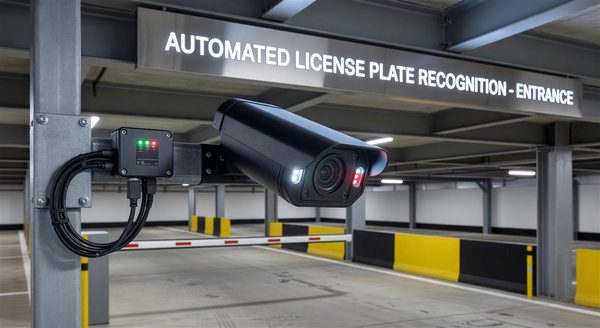
LPR (License Plate Recognition): Dedicated LPR cameras are positioned differently than general surveillance cameras — usually at entry/exit lanes, angled 15–30° from horizontal, with IR illumination optimized for plate reflectivity. General surveillance cameras are rarely adequate for LPR. See our LPR camera guide for dedicated plate capture requirements.
Access Control Integration: Modern VMS (Video Management Software) platforms can trigger camera recording on access control events — gate open/close, card swipe, denied access attempt. This event-based recording dramatically reduces storage requirements while ensuring footage is captured when it matters.
Analytics Integration: Motion detection, loitering alerts, and people counting are now available at the camera level on many commercial units. These features add $50–$200 to per-camera cost but can reduce monitoring labor significantly.
Price Ranges and What You Get
Entry Tier ($150–$400/camera): Consumer-grade IP cameras (Hikvision ColorVu base models, Reolink commercial). Acceptable for low-risk indoor installations. Limited warranty (1 year), basic software integration, minimal analytics. Not recommended as primary evidence cameras.
Commercial Tier ($400–$1,200/camera): The standard for most parking deployments. Covers dome and bullet cameras from Axis, Hanwha, Vivotek, and Avigilon entry-level lines. Better low-light performance, 3–5 year warranties, full VMS integration, optional analytics licenses.
Enterprise Tier ($1,200+/camera): Multi-sensor cameras, high-end PTZs, AI-powered analytics. Appropriate for high-transaction facilities, large multi-level structures, or operations with active monitoring staff. Axis P-series, Avigilon H6, Hanwha Q-series.
Buying Checklist
Before issuing an RFP or getting quotes, confirm:
- Resolution spec per camera zone (plate capture vs. general surveillance)
- IR range matches maximum coverage distance at each location
- WDR rating above 120dB for any entry/exit facing outside
- IP66+ for all outdoor or partially exposed cameras
- IK10 rating for all cameras within reach from ground level
- NVR storage sized for maximum retention requirement × total bitrate
- VMS software compatibility confirmed with access control platform
- Operating temperature spec matches installation climate
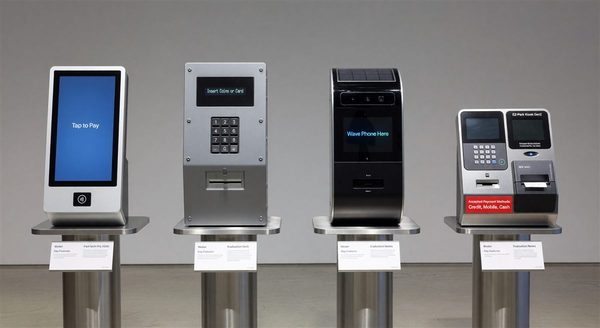
For a full system budget that integrates cameras with gates, pay stations, and access control, see our complete equipment buyers guide.