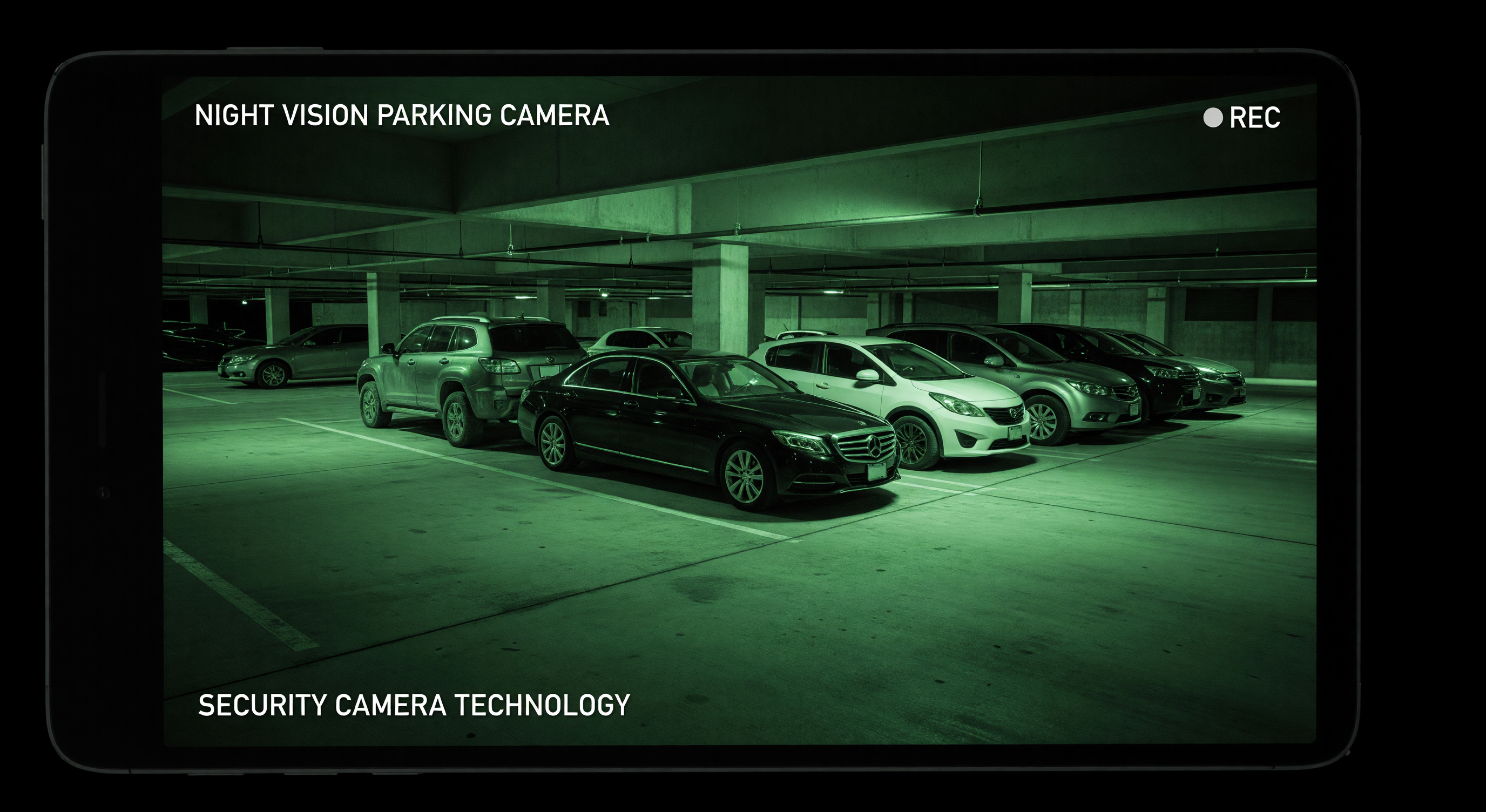
The majority of parking facility security incidents occur at night or in low-light conditions. A camera system that provides excellent coverage during daylight hours but produces grainy, unusable footage after dark provides limited security value and is potentially misleading — operators assume coverage exists when it functionally doesn’t.
Specifying cameras for parking facilities without explicitly addressing nighttime performance is a common procurement error. This guide covers the specifications, technologies, and trade-offs that determine whether a camera system actually works after dark.
Why Low-Light Specification Is Not Intuitive
“Night vision cameras” is a marketing category, not a technical specification. The actual performance differences between cameras operating in low-light conditions come from:
- The sensitivity of the image sensor (minimum illumination rating)
- The type and quantity of IR illumination provided or available
- The lens aperture (f-number)
- The sensor size (larger sensors gather more light)
- The image processing algorithms applied to low-light signals
All of these interact. A camera with excellent sensor sensitivity but a small aperture lens may produce worse results than a less sensitive sensor with a larger aperture. Understanding these interactions helps evaluate cameras against your actual nighttime conditions rather than marketing specifications.
Minimum Illumination Ratings
Camera manufacturers specify minimum illumination — the lowest light level at which the camera produces a usable image — in lux or foot-candles. Lower numbers indicate better low-light performance.
Lux Reference Points
| Condition | Approximate Lux |
|---|---|
| Full moonlight | 0.01–0.1 lux |
| Dimly lit parking lot | 1–5 lux |
| Typical streetlit parking | 10–50 lux |
| Well-lit indoor parking | 100–500 lux |
| Outdoor daytime | 1,000–10,000 lux |
Most parking facilities have overnight lighting that ranges from 0.5 to 20 lux depending on the facility type, lighting design, and whether the lighting is reduced for energy savings overnight.
A camera specified with a minimum illumination of 0.01 lux can produce color images in conditions that would appear completely dark to human observers. A camera specified at 1 lux minimum will struggle or fail in the dimly lit areas common in overnight parking facilities.
Color vs. Black-and-White Minimum Illumination
Most cameras specify separate minimum illumination ratings for color and black-and-white modes. Color images require approximately 10x the light level that black-and-white images require on the same sensor. Many cameras automatically switch to black-and-white mode at low light levels to extend the range at which they produce useful images.
For parking security applications, black-and-white footage is adequate for identification purposes. Don’t over-weight color performance at low light levels unless color identification (vehicle color) is a specific requirement.
IR Illumination: Built-In vs. Supplemental
Built-In IR (Standard IR)
Most commercial parking cameras include built-in IR LEDs that illuminate the scene in near-infrared light (typically 850nm or 940nm wavelength). The camera sensor captures this illumination; the human eye cannot see 850nm light (940nm is invisible; 850nm produces a faint red glow visible at close range).
Effective range: Built-in IR illumination ranges from 30 to 150 feet depending on the number and power of IR LEDs. The effective range is often overstated in manufacturer specs — test at your actual deployment distance.
Illumination pattern: Built-in IR LEDs have a fixed beam angle. Wide-angle cameras need wide-angle illumination; telephoto cameras need narrow illumination. Mismatches between lens angle and illumination pattern create bright centers with dark edges in the image — “hot spot” effect.
Supplemental IR Illuminators
For cameras without adequate built-in IR or for applications requiring illumination beyond built-in range, supplemental IR illuminators can be added. They’re separate units mounted near the camera.
Supplemental illuminators allow precise matching of beam angle and distance to the camera’s FOV, avoid the hot-spot problem from mismatched built-in LEDs, and extend effective range beyond what built-in LEDs can achieve.
For long-range LPR and high-performance security cameras where image quality is critical, supplemental illuminators from dedicated manufacturers outperform integrated LEDs.
Starlight and Color Night Vision Technology
Starlight Sensors
“Starlight” is a marketing term used by multiple manufacturers to describe cameras with exceptionally high sensor sensitivity. There’s no industry-standard definition, but cameras marketed as starlight typically achieve minimum illumination ratings of 0.001–0.01 lux in color mode.
The technology behind starlight performance:
- Larger pixel pitch (reduces resolution for a given sensor size but increases light-gathering per pixel)
- Back-illuminated sensor designs that improve quantum efficiency
- Advanced noise reduction processing
- Wide aperture lenses (f/1.0 to f/1.4 vs. standard f/2.0)
Starlight cameras produce usable color images in conditions that standard cameras see as near-black. For parking facility applications where adequate outdoor lighting exists (even minimal), starlight cameras can maintain color imaging through the night.
Color Night Vision
Some cameras use dual-sensor designs, image fusion from multiple exposures, or AI-based color reconstruction to produce color images in near-darkness. Performance varies significantly across products — some produce natural-looking color images; others produce oversaturated or artificially colored results.
Test color night vision performance at your site’s actual lighting conditions before committing to a platform that relies on this feature.
White Light Cameras: The Alternative to IR
Some cameras use visible white light supplemental illumination rather than IR. Advantages:
- Color images with full accuracy (no monochrome at night)
- Illuminated area is visible to human observers, providing deterrent effect
- No IR spectrum mismatch issues
Disadvantages:
- Visible illumination may be unwanted aesthetically or for light pollution reasons
- Consumes more power than IR illumination
- Illuminated area is visible to vandals, who can aim at the light rather than the camera
White light cameras are appropriate in applications where color identification is critical and the deterrent effect of visible illumination is valued.
Parking Facility Lighting and Camera Specification
The relationship between facility lighting and camera specification has significant cost implications. A facility investing in adequate parking lot illumination (10+ lux throughout) can use standard cameras with standard IR illumination and achieve excellent nighttime performance. A facility with minimal overnight lighting needs either:
- High-sensitivity cameras with strong supplemental illumination
- Upgraded facility lighting (often the more cost-effective total solution)
- Acceptance of degraded nighttime camera performance
Evaluate whether camera specification upgrades or facility lighting upgrades provide better value for your nighttime coverage goals before specifying cameras.
Frequently Asked Questions
What is the minimum lux rating I should specify for parking cameras? For parking facilities with typical overnight lighting (5–15 lux), specify cameras with a minimum illumination of 0.05 lux or better in color mode. For facilities with minimal overnight lighting (below 2 lux), specify 0.01 lux or better with supplemental IR illumination.
How far can a parking lot camera see at night? Effective night vision range depends on illumination power and camera sensitivity. Standard built-in IR provides 30–80 feet of useful range for most commercial cameras. With supplemental IR illuminators, coverage extends to 150–300 feet. Verify claimed range with a night test at your facility before purchase.
Do IR cameras work in rain and fog? IR illumination is attenuated by heavy precipitation and dense fog — the effective range shortens significantly in these conditions. Thermal cameras maintain detection in fog and rain, which is one of their primary advantages over IR-based systems. See our thermal camera guide for specific fog/rain performance data.
Why do some parking cameras look grainy at night even with IR? Graininess (digital noise) in low-light images results from the camera amplifying the weak signal from the sensor. Better cameras use larger pixel sizes and better noise reduction processing to reduce visible grain. Cameras with ISO ratings or low-light noise specifications listed in the data sheet provide a better comparison basis than marketing claims alone.
Key Takeaway
Nighttime camera performance is the single most underevaluated aspect of parking security camera procurement. Test cameras under your actual overnight conditions before purchasing — not in a demo room or during daylight site visits. The camera that performs best at night is often not the camera with the highest daytime resolution.