License plate recognition camera performance is highly sensitive to installation geometry. A camera with 99% specified accuracy mounted at the wrong angle, wrong height, or in inadequate lighting conditions will produce read rates well below specification — sometimes below 90% — creating operational failures in access control and enforcement applications.
LPR camera mounting is a technical installation discipline, not a general CCTV installation. The parameters are more demanding and more precise. This guide covers the installation specifications that determine read accuracy and the mistakes that most commonly cause post-installation performance problems.
Core Mounting Parameters
Camera-to-Vehicle Angle
The angle between the LPR camera and the license plate surface is the most critical installation variable. License plates must be captured within a specific angular range for reliable character recognition.
Horizontal angle (yaw): The camera should be positioned at a horizontal angle of 0–30 degrees from the plane of the plate. Beyond 30 degrees, plate characters become foreshortened and character recognition accuracy drops sharply. For lane entry cameras positioned at the side of the lane, stay within 25 degrees.
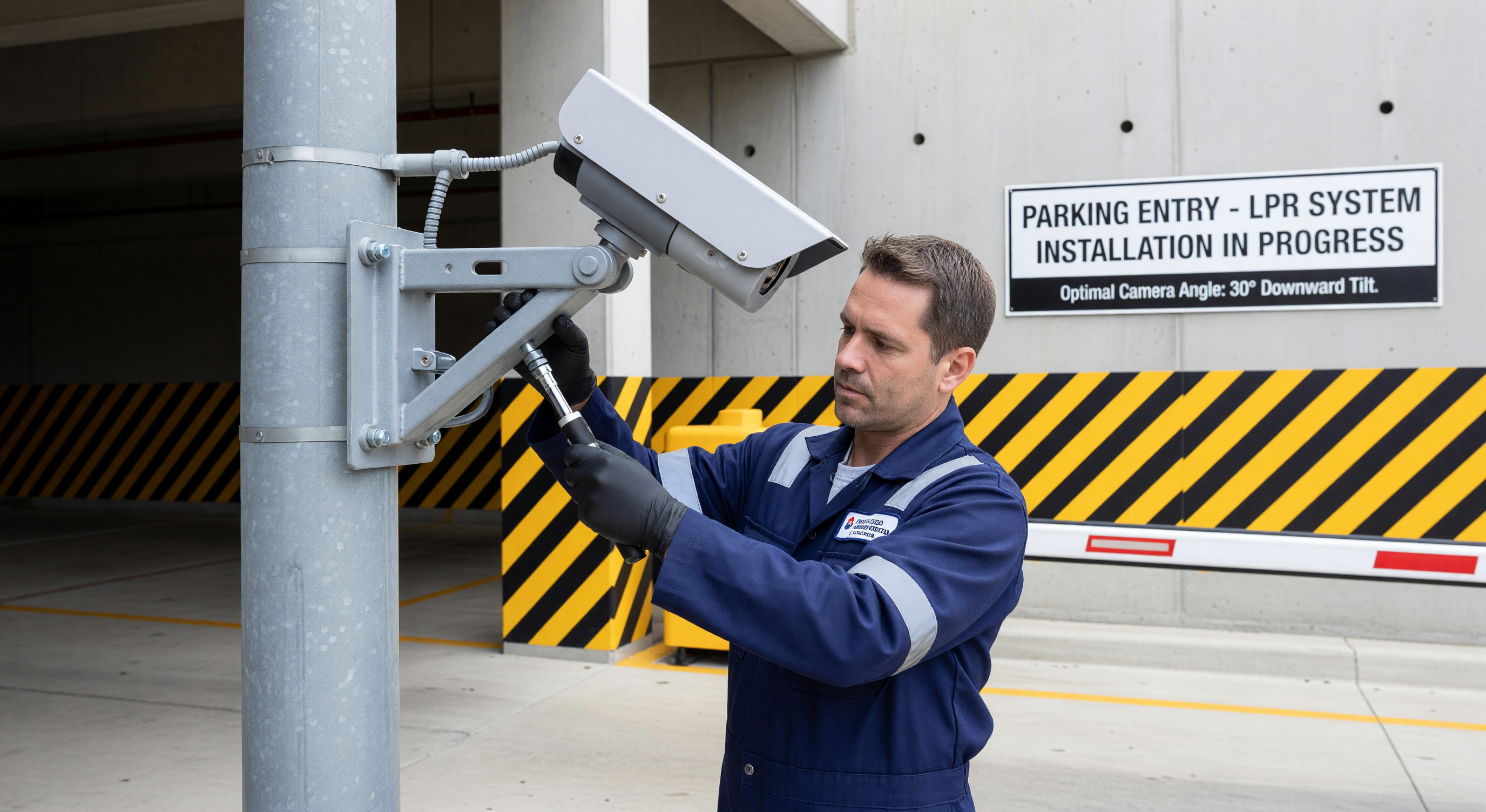
Vertical angle (pitch): The camera should capture the plate at a downward angle of 15–30 degrees. Angles below 15 degrees can result in the camera mounting being at vehicle windshield level, obscuring the plate with vehicle body. Angles above 45 degrees produce significant plate foreshortening and reduced character resolution.
Roll: The camera should be level or within 5 degrees of level. Plates captured at significant roll angles are harder for recognition software to process correctly.
Mounting Height
Optimal LPR camera mounting height for parking facility entry/exit lanes:
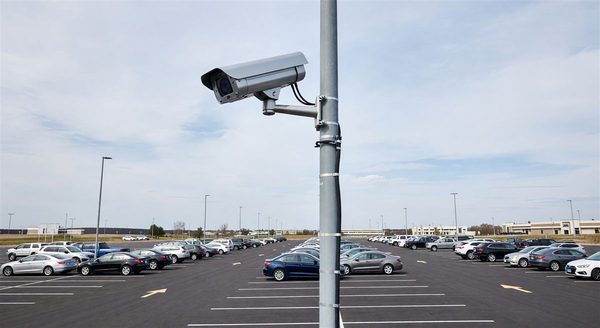
- Overhead boom or gantry mount: 10–14 feet above the lane surface. This provides a good downward angle (20–30 degrees) to the license plate while keeping the camera above driver sightline.
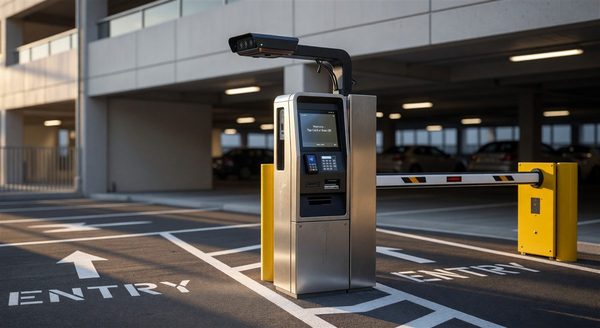
- Side-mounted (on gates or posts): 4–5 feet above the lane surface for front-plate capture; 3–4 feet for rear-plate capture. Side mounts at lane entry should be positioned to capture the approaching vehicle from the front.
- Ground-level (aggressive front angle): 2.5–3 feet for facilities using extreme close-range capture. This is only appropriate in controlled-speed entry lanes.
For typical parking facility entry/exit lanes with vehicles approaching at 5–15 mph, overhead mounting at 10–14 feet provides the best combination of coverage angle, vehicle clearance, and plate presentation consistency.
Lane Geometry Considerations
Capture Zone Definition
Define the capture zone before selecting camera position — the zone where a vehicle must be when its plate is captured. For barrier gate access control, the ideal capture zone is when the vehicle is stopped at the gate, or slowing to stop. For enforcement or throughput applications, the zone may be a wider approach area.
The capture zone determines the required camera field of view and affects the resolution required across the capture area. A plate that is 50 feet from the camera requires higher camera resolution than a plate that is 15 feet away.
Required Plate Resolution
LPR recognition accuracy depends on the number of pixels spanning the plate width in the captured image. Standard requirement: minimum 40–60 pixels across the plate width for reliable recognition; 80–120 pixels preferred.
Calculate whether your camera resolution, lens selection, and mounting distance combination delivers adequate pixels-per-plate for your capture zone. Most LPR vendors provide online calculators that assist with this calculation.
Lane Width and Multi-Lane Applications
For facilities with multiple entry/exit lanes, each lane requires its own dedicated LPR camera — a single camera cannot reliably read plates across multiple lanes simultaneously.
In multi-lane scenarios, ensure no camera’s field of view includes adjacent lanes in a way that could create false plate reads. Lane separation barriers, camera angle discipline, and capture zone configuration address this.
Illumination Requirements
Daytime Conditions
In daytime conditions with adequate ambient light, most commercial LPR cameras perform reliably without supplemental illumination. Challenges:
Direct sun on the plate: Specular reflection from direct sunlight on a shiny license plate surface can wash out plate detail. Position cameras to avoid a viewing angle that places the sun directly behind the approaching vehicle during peak hours. A site assessment at different times of day is necessary.
Shade and light transitions: Lanes where vehicles transition from full sun to deep shade (tree canopy, structure overhangs) create dynamic range challenges. Wide dynamic range (WDR) cameras address this.
Night and Low-Light Conditions
Dedicated IR illumination is required for reliable LPR at night. Standard camera IR illumination is often inadequate for LPR — the illumination pattern doesn’t match the narrow FOV of the LPR lens, or the illumination distance is insufficient.
Matched illumination: Specify IR illumination that matches the camera’s focal length and capture distance. Wide-angle illuminators with telephoto lenses create dark corners in the capture zone. Narrow illuminators with wide-angle lenses concentrate illumination on only a portion of the capture zone.
Wavelength: Most LPR cameras use 850nm IR illumination, which is slightly visible as a red glow. Cameras that perform adequately with 940nm “covert” illumination (invisible to the naked eye) require higher-sensitivity sensors.
Illumination power: Calculate illumination intensity at the capture distance. A manufacturer rating of “effective to 30 meters” at the illuminator means different things depending on reflectivity of the target. License plates have higher retroreflectivity than most surfaces — they’re designed to be visible to traffic cameras. Standard retroreflective sheeting plates return illumination well.
Environment-Specific Considerations
High-Speed Applications
Vehicle speed at capture significantly affects required shutter speed. At 15 mph (22 feet per second), a camera with a 1/100 shutter captures 0.26 feet of vehicle movement per frame — acceptable for most capture zone lengths.
At 30 mph, the same camera captures 0.53 feet of movement per frame. For lanes where vehicles enter above 20 mph (highways, faster commercial entries), faster shutter speeds (1/250 to 1/1000) or higher frame rates are necessary to prevent motion blur on plate characters.
Dust, Snow, and Contamination
LPR cameras in environments with road salt, dust, or heavy precipitation face enclosure contamination issues. The camera lens (or protective dome) accumulates deposits that reduce image quality over time.
Specify heated front glass and wiper systems for cameras in climates with heavy snow or ice. Plan a cleaning schedule for cameras in dusty environments — quarterly cleaning minimizes the performance degradation from accumulated contamination.
Post-Installation Verification
After installation, verify LPR performance before go-live with a structured read rate test:
- Drive 100 consecutive vehicles through the capture zone
- Record whether each plate was correctly read, incorrectly read, or not read
- Calculate read rate
- Test during daylight and nighttime conditions separately
- Test with various plate types (standard, specialty, vanity, temporary)
A read rate below 95% requires diagnosing and correcting installation issues before going live. Common issues found at this stage: insufficient IR illumination, angle outside specification, plate resolution below minimum threshold.
Frequently Asked Questions
What causes LPR read rate to drop below specification after good initial performance? Common causes: lens contamination reducing image sharpness, IR illuminator degradation over time, software/firmware updates that changed recognition parameters, or seasonal sunlight angle changes affecting glare. Regular maintenance and annual read rate checks identify developing issues.
Can one LPR camera cover both entry and exit at a single-lane entry/exit point? Yes, with a camera positioned to capture approaching plates from either direction. The software must handle bidirectional reads. Most modern LPR platforms support bidirectional lanes.
How do temporary plates and paper plates affect LPR accuracy? Paper temporary plates, used by dealerships and some states for new vehicles, are significantly harder for LPR systems to read than reflective permanent plates. Read rates for temporary plates are typically 30–50 percentage points below standard plate read rates. Plan for manual override processes for vehicles with temporary or damaged plates.
What is the maintenance interval for LPR cameras? Quarterly preventive maintenance (lens cleaning, housing inspection, illuminator check, firmware review) is standard. In harsh environments (salt, dust, heavy precipitation), monthly inspection and cleaning is appropriate.
Key Takeaway
LPR camera installation failures are almost always geometric or illumination failures, not hardware failures. The camera is performing as specified — the installation doesn’t match the specification. Pre-installation design review against the mounting parameters in this guide, followed by post-installation read rate verification, prevents the majority of LPR performance issues.