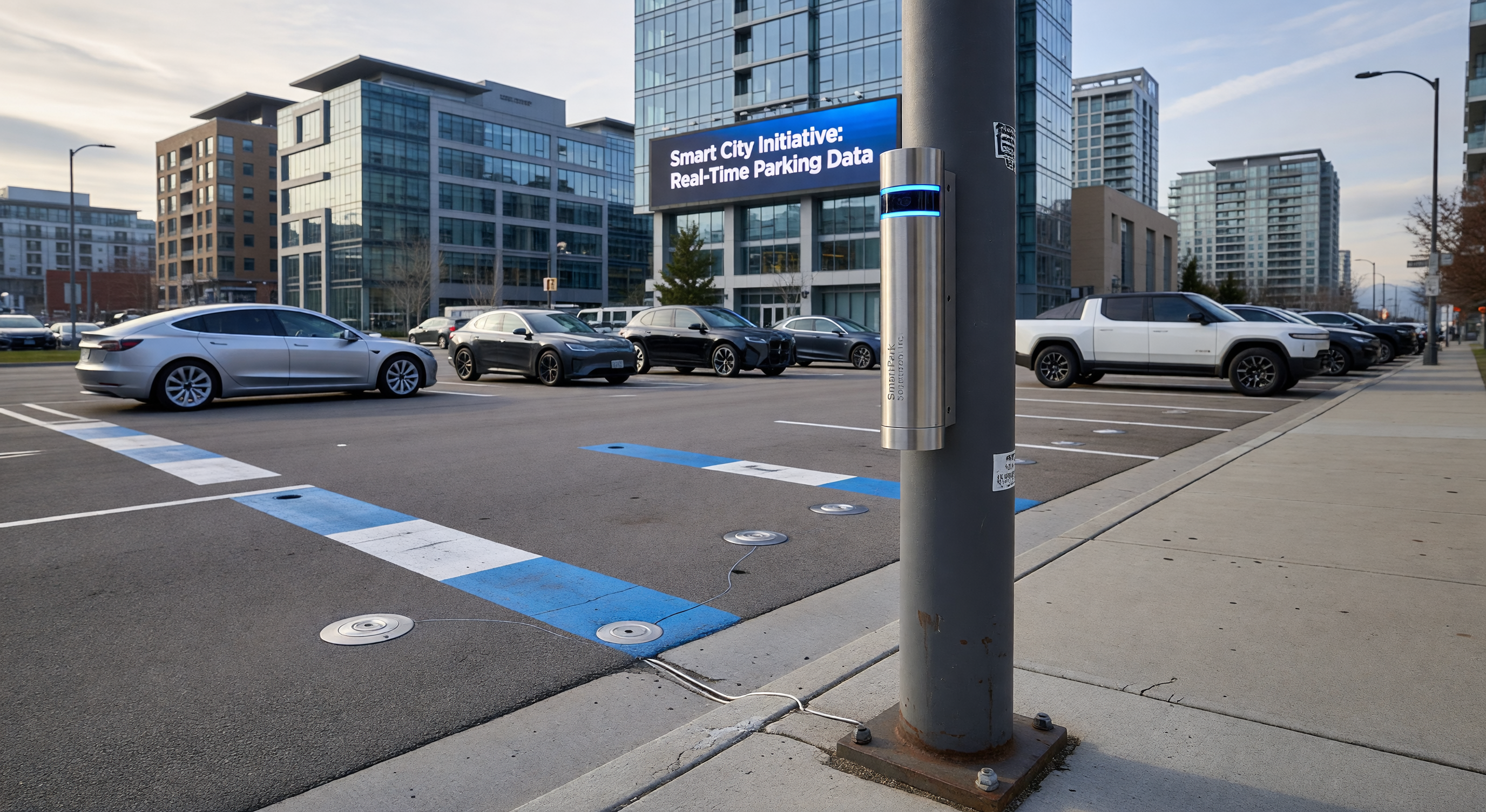
Curbside space management has become a priority for municipalities and urban facility operators as delivery vehicles, rideshare pickups, transit stops, and short-term parking compete for the same limited curb space. Smart curb detection technology — sensors, cameras, and management platforms designed specifically for curbside applications — has emerged as a practical solution for measuring and managing curb utilization in ways that static signage and manual enforcement cannot.
This guide covers the sensor technologies available for curbside detection, the data and management capabilities these systems provide, and the procurement considerations for municipalities and private operators evaluating curb management equipment.
The Curb Management Problem
Urban curbside space is among the most contested real estate in a city. A single block-face of curb may have different designated uses at different times of day: school loading zone in the morning, delivery zone during business hours, metered parking in the afternoon, and no-parking for evening rush hour. Managing these transitions effectively requires knowing whether spaces are occupied or vacant in real time — information that manual enforcement cannot provide continuously.
The proliferation of e-commerce delivery vehicles has intensified this problem. Delivery vehicles blocking travel lanes or loading in unauthorized zones creates traffic disruption, transit delays, and conflict with other curb users. Cities with active curb management programs report significant reductions in double parking when delivery zones are clearly available and actively managed.
Sensor Technologies for Curbside Detection
Magnetometer/Magnetic Field Sensors
In-pavement magnetic sensors detect the metallic mass of vehicles through magnetic field disturbance — the same technology used in parking space sensors. For curbside applications, sensors are typically embedded in the pavement at the edge of the curbside zone.
Advantages: High detection accuracy (97–99%) across vehicle types; weather-independent; no active illumination required; low power consumption (multi-year battery operation in wireless versions).
Disadvantages: Pavement installation requires coring — disrupting traffic for installation in active lanes; sensors can be damaged by street maintenance equipment; calibration required near ferrous infrastructure (grates, utilities).
Best fit: High-priority urban curb zones where installation disruption can be managed; delivery zones, transit stops, and metered spaces where accurate detection is operationally critical.
Camera-Based Detection
Cameras positioned above curb zones use computer vision analytics to detect vehicle presence, dwell time, vehicle type classification (sedan, van, truck), and time-of-entry/exit.
Advantages: No pavement installation; single camera covers multiple spaces; provides vehicle type data useful for zone policy enforcement (delivery vehicle only zones); image record supports enforcement documentation.
Disadvantages: Requires power and network infrastructure at camera locations; lighting-dependent (nighttime performance varies); camera maintenance and vandalism exposure in urban environments.
Best fit: Business districts with existing street infrastructure (poles, signals); delivery management programs where vehicle type classification improves zone allocation.
Radar-Based Detection
Radar sensors emit radio waves and measure returns from vehicles. They work in complete darkness, through light precipitation, and don’t require line-of-sight in the same way cameras do.
Advantages: All-weather operation; can detect multiple objects simultaneously; no privacy concerns (radar doesn’t capture identifiable images).
Disadvantages: Cannot classify vehicle type; requires careful placement to avoid interference from adjacent traffic lanes; less common than camera or magnetic solutions in current deployments.
Best fit: Transit stops and safety-critical zones where reliable detection in adverse weather conditions justifies higher unit cost.
Ultrasonic Sensors (Pole-Mounted)
Ultrasonic sensors mounted on poles or infrastructure overhead can detect vehicle presence in the space below. They avoid pavement cutting but require mounting infrastructure at appropriate height.
Advantages: No pavement modification; good accuracy; well-established technology from parking structure applications.
Disadvantages: Weather can affect performance in outdoor environments (precipitation, extreme temperature); urban pole mounting at appropriate height can be complex in existing streetscapes.
Best fit: Facilities with existing pole infrastructure where extending coverage to curbside areas avoids new infrastructure investment.
Delivery Zone Management Systems
Zone Reservation Platforms
Some cities and private operators have implemented curb reservation systems — platforms that allow delivery carriers (UPS, FedEx, Amazon, local couriers) to reserve time slots in designated delivery zones before dispatching a driver.
These systems require two components: a curb detection system that reports actual occupancy in real time, and a reservation platform that manages slot availability and communicates with carrier dispatch systems.
Integration requirements:
- Carrier API access (or manually-operated web portal for smaller carriers)
- Detection system with real-time availability data
- Enforcement mechanism (signage, permits, LPR enforcement) for unauthorized zone use
- Billing system if delivery slot reservation is fee-based
Operational outcomes from active deployments: Delivery zone reservation programs in cities including Seattle and San Francisco have shown 20–40% reductions in curb congestion events in program zones.
Loading Dock Management (Private Facilities)
Private facilities with loading docks face similar management challenges to urban delivery zones. Smart dock management systems track dock occupancy, reserve dock time slots for tenants and carriers, and provide visibility into dock utilization for operational planning.
Sensor technology options for loading dock occupancy:
- Overhead ultrasonic sensors at dock positions
- Magnetic sensors embedded in dock approach pavement
- Camera-based detection with dock occupancy analytics
- Laser time-of-flight sensors for precise presence detection in controlled dock environments
Data and Reporting Capabilities
Real-Time Availability
The primary operational output of curbside detection: which spaces or zones are currently occupied, which are vacant, and how long has each been occupied. This data enables:
- Dynamic signage showing available delivery zone status
- Enforcement prioritization (longest-occupied unauthorized vehicles first)
- App integration for carriers to see real-time zone availability before dispatching
Dwell Time Analysis
How long do vehicles occupy curb spaces? This data reveals:
- Whether time limits are appropriate for actual user behavior
- Zones with chronic overstay violations vs. zones with healthy turnover
- Peak occupancy periods for staffing enforcement resources
Curb Policy Optimization
Accumulated occupancy data supports data-driven decisions about curb allocation:
- Reallocating underused parking spaces to delivery zones during business hours
- Adjusting time limits based on actual dwell time distribution
- Identifying blocks where curb demand exceeds capacity and prioritizing investment
Procurement Considerations
Sensor Selection vs. System Selection
Curbside detection should be procured as a complete system (sensor + connectivity + management software + analytics), not just as sensor hardware. The value is in the data platform, not the hardware alone.
Evaluate management platform capabilities:
- Real-time occupancy API for enforcement and app integration
- Historical data storage and export
- Reporting tools for curb utilization analysis
- Integration with existing parking management systems or city mobility platforms
Connectivity and Infrastructure
Wireless sensors require a communication network — typically LoRaWAN or NB-IoT (Narrowband IoT) for low-power, long-range connectivity. Verify coverage in your deployment area before committing to a wireless sensor technology.
Camera-based systems require power (often from existing street lighting infrastructure) and connectivity (Ethernet or cellular). Evaluate existing infrastructure availability along your target curb zones before specifying camera-based detection.
Pilot Before Scale
Curbside detection deployments at scale (multiple blocks or a city program) benefit from pilot deployments of 10–20 sensors to validate accuracy, connectivity, and management platform performance before full commitment. Different urban environments have different interference characteristics — what works in one city’s streetscape may require calibration adjustment in another.
Frequently Asked Questions
How accurate are smart curb sensors in detecting vehicle occupancy? Magnetic sensors in good installation conditions achieve 97–99% detection accuracy. Camera-based systems achieve 93–97% under adequate lighting. Both technologies perform better for detection than for vehicle type classification, which adds another layer of classification challenge.
Can smart curb sensors issue violations automatically? Detection systems can identify overstays and flag them for enforcement review, but issuing a legally defensible violation typically requires officer confirmation (camera image capture + officer verification or direct observation). Fully automated citation issuance without human review is not standard practice in most jurisdictions and may have legal limitations.
What is the installed cost per sensor for a curb detection program? Magnetic in-pavement sensors run $300–$700 per sensor including installation; 2–4 sensors typically cover a standard curb space. Camera-based systems run $2,000–$5,000 per zone camera covering 3–8 spaces. Management software costs add $5,000–$30,000 annually depending on zone count and feature set.
Do curb sensors require ongoing maintenance? Magnetic sensors are low maintenance — battery replacement every 3–7 years and occasional calibration check. Camera systems require standard camera maintenance (cleaning, firmware updates). Pavement-embedded sensors in high-traffic urban environments may need replacement if road maintenance damages the pavement at sensor locations.
Key Takeaway
Curbside detection technology provides its greatest value when combined with active management — using the data to enforce zone policies, optimize zone allocation, and communicate availability to users. Sensor deployment without a management and enforcement commitment produces data that doesn’t change curb behavior. The technology is a tool; the program is what produces results.