Used parking equipment purchases can generate real savings — or they can transfer someone else’s problems onto your facility for years. The difference between these outcomes depends almost entirely on what you inspect before purchase and what protections you build into the transaction.
This guide covers the categories where secondhand equipment represents reasonable value, the red flags that should end a purchase conversation, and the verification steps that separate educated buyers from expensive lessons.
Where Used Equipment Makes Sense
Not all parking equipment categories carry equal secondhand risk. The best used purchases are mechanically simple, widely serviced, and not dependent on proprietary software licenses.
High-value used purchase candidates:
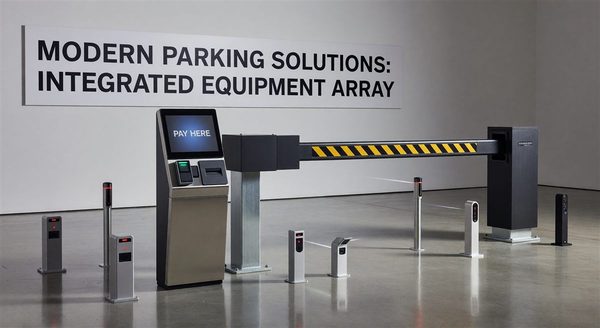
Barrier gates: Gate arms, motors, and loop detector hardware are mechanically straightforward. Parts are widely available for most major brands. A 3–5 year old barrier gate from a reputable manufacturer, properly maintained, can deliver years of additional service. Inspect motor brush wear, gearbox condition, and cabinet rust before purchase.
Intercom units: Entry/exit intercom hardware ages gracefully if protected from moisture. Test audio quality, speaker response, and call button function thoroughly. Replace gaskets and weatherstripping as part of any used intercom purchase.
Parking signage and display units: LED sign hardware (not the control electronics) depreciates slowly. Verify LED panel uniformity and check for moisture intrusion in the cabinet.
Bollards and physical infrastructure: Concrete or steel physical infrastructure is essentially commodity and secondhand sourcing makes obvious sense.
Lower-value used purchase candidates:
Pay stations: The economics of used pay stations are complicated by payment certification. EMV certification for credit card terminals is specific to the hardware/software combination. A used pay station may require recertification (expensive, sometimes more than the hardware cost) or may not support current card reader standards. Evaluate carefully.
RFID readers: Credential format lock-in makes secondhand RFID hardware a risk. A reader that uses a proprietary credential format incompatible with your planned credential system is worthless regardless of its physical condition.
What to Avoid in the Secondhand Market
End-of-life equipment. Parking equipment manufacturers typically support parts for 7–10 years after a model discontinuation. Equipment from discontinued product lines may look functional but expose you to a parts cliff — a single component failure with no available replacement that takes the unit permanently offline.
Always verify parts availability before purchase. Call the manufacturer directly (not the reseller) and ask for current parts availability and support status for the specific model and serial number range.
Equipment with proprietary software locks. Some PARCS platforms use software licensing tied to hardware serial numbers. Buying used equipment without verifying that the software license transfers — and that the platform vendor will honor the transfer — creates a situation where you own hardware that won’t function.
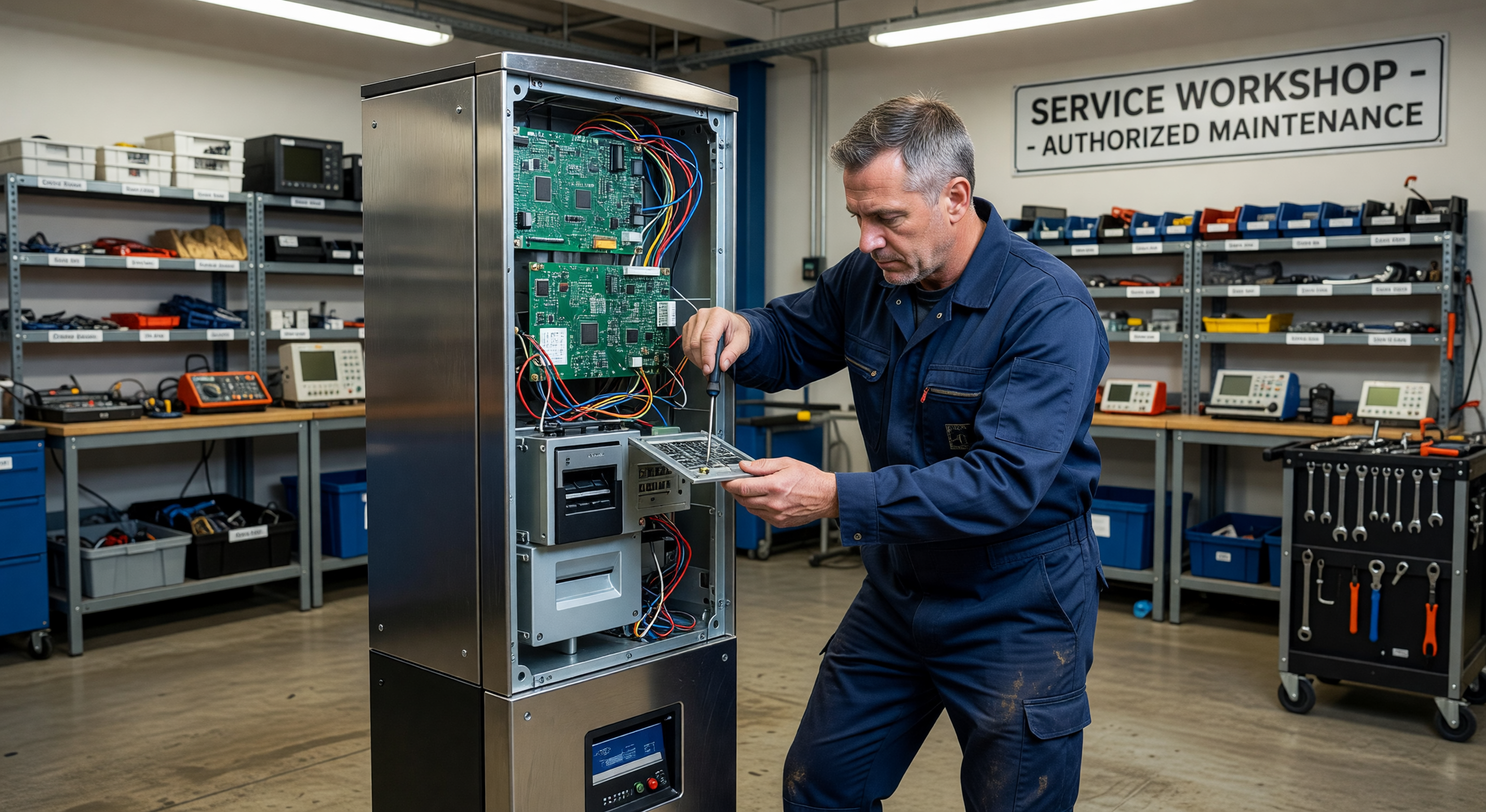
Water-damaged equipment. Moisture intrusion in payment electronics is often invisible externally but catastrophic internally. Request to see internal cabinet condition, check for corrosion on circuit boards, and look for water staining on component mounts. Walk away from any unit with evidence of moisture damage to electronics.
Equipment from unknown-condition environments. A pay station that spent four years in a heavily vandalized urban location has lived a different life than identical hardware from a suburban office park. Ask for the operational history, service records, and location type before evaluating.
Verification Process for Used Equipment
Physical Inspection Checklist
Before purchase, inspect the following:
Enclosure and mechanical components:
- Cabinet integrity: dents, cracks, or evidence of forced entry
- Rust or corrosion on external surfaces and internal mounting hardware
- Door seals, gaskets, and weatherstripping condition
- Hinge and locking mechanism function
- Powder coat or paint condition (surface corrosion indicator)
Electronics:
- Circuit board visual inspection: look for corrosion, burn marks, or component damage
- All connectors seated and free of oxidation
- Cooling fan function (if applicable)
- Display screen — test for dead pixels, brightness uniformity
- LED indicator function
Mechanical components:
- Motor operation: listen for grinding, bearing noise, or irregular operation
- Gearbox: check for play and smooth engagement
- Gate arm mounting: check for cracks or stress fractures at mounting point
- Safety sensors: test function with manual trigger
Payment hardware (if applicable):
- Card reader: test with known-good payment cards
- Bill acceptor: test with multiple bill denominations
- Coin mechanism: test acceptance and rejection
- Thermal printer: test print quality and paper path
Software and Licensing Verification
Before purchasing any equipment with embedded software:
- Obtain the serial number and model number before purchase
- Contact the manufacturer’s software licensing team directly to verify the license is transferable, not expired, and not flagged
- Confirm current software version is still supported
- Verify that software updates are available for the hardware version you’re purchasing
Reference Check for Resellers
Legitimate equipment resellers have customer references. Ask for two or three references from buyers who purchased the same equipment category. Ask those references specifically:
- Was the equipment condition as described?
- Did the equipment function as represented after installation?
- How did the reseller respond when problems arose post-purchase?
Sourcing Used Equipment
Equipment dealers and remarketing companies are the most structured source. Reputable dealers inspect, test, and document equipment before resale. Expect to pay a premium over auction prices in exchange for verified condition and some form of limited warranty.
Parking operator liquidations occur when facilities close, consolidate management, or upgrade systems. Equipment from these sales is often well-maintained (facilities motivated to sell are typically operating facilities), but buyer-beware terms are standard. You’re buying as-is without manufacturer support.
Direct facility purchases — buying from an operator replacing equipment — can yield the best condition at reasonable prices, but requires the most due diligence since there’s no intermediary providing any assurances.
Online auction platforms are the highest-risk sourcing channel. Condition verification is difficult or impossible, and return options are typically limited. Reserve auction purchases for commodity hardware (gate arms, intercom hardware) where condition is easily assessed on arrival.
Contractual Protections
Any used equipment purchase should include:
- Written description of condition matching what you inspected — if the seller won’t put the condition claim in writing, don’t buy
- Return provision for 30–60 days if the equipment fails to function as represented
- Disclosure of known defects — require the seller to represent that all known defects have been disclosed
- Software license transfer documentation — written confirmation from the manufacturer that the license transfers with the hardware
For purchases over $10,000, involve your legal team in reviewing the purchase agreement. A $500 legal review that catches a software licensing issue saves significant money.
Frequently Asked Questions
How much should I expect to save buying refurbished versus new? Typical used equipment prices run 30–60% below new list price depending on age, condition, and category. Factor in reconditioning costs (gaskets, cleaning, calibration, payment certification if required) to get an accurate net savings figure.
Can I get a warranty on used parking equipment? Some dealers offer 90-day to 1-year limited warranties on refurbished equipment. Original manufacturer warranties do not transfer. Third-party equipment warranty providers cover some categories of used equipment — compare terms carefully.
Is refurbished equipment eligible for the same software support as new? This varies by manufacturer. Some manufacturers support equipment by model generation regardless of whether it was purchased new or used. Others tie support to original purchase registration. Verify this directly with the manufacturer before purchase.
What’s the biggest mistake buyers make with used parking equipment? Skipping the software and licensing verification step. Hardware condition issues are usually visible on inspection; software lock-in issues aren’t visible until you try to activate the equipment and discover the license is non-transferable.
Key Takeaway
Used parking equipment offers real value in the right categories, under the right conditions. The buyers who get that value invest in pre-purchase verification. The buyers who get burned skip it in the interest of closing a deal quickly.