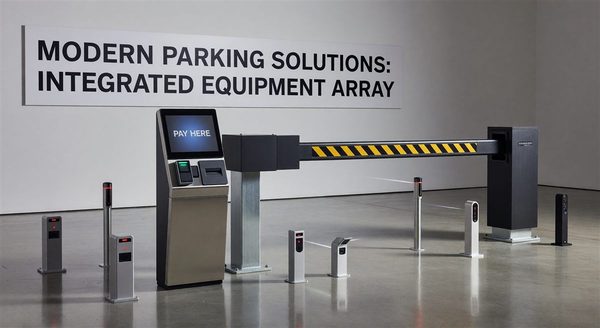
Parking equipment warranties are not all 1-year or 3-year commitments. The duration printed on a sales sheet obscures the variance in what’s actually covered, how quickly service is dispatched, who pays for what, and whether the warranty is backed by the manufacturer or an insurance underwriter with different incentive structures.
This guide breaks down the elements of parking equipment warranties that matter operationally, the exclusions that most commonly cause disputes, and the questions to ask vendors before signing.
Why Warranty Terms Deserve Procurement Attention
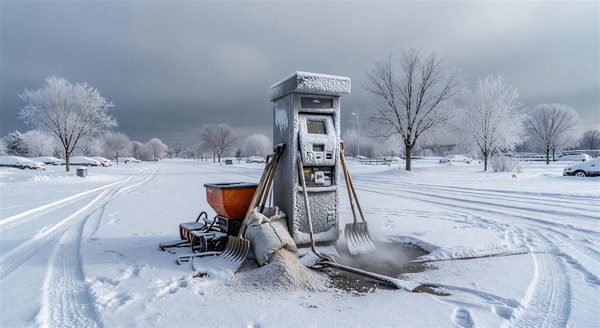
Parking equipment operates in demanding environments: traffic stress on gate arms, temperature cycling in outdoor pay stations, vandalism in high-footfall areas, moisture intrusion in coastal or winter environments. Warranty terms that seem adequate in a showroom can reveal significant gaps when real operating conditions produce real failures.
A facility that loses a revenue lane for 72 hours waiting for a warranty-covered part loses far more than the repair cost. Revenue impact from lane downtime typically ranges from $500 to $3,000 per day depending on facility size and mix — amounts that dwarf the cost of a service call.
Warranty quality is effectively a proxy for after-sale service capability. Manufacturers with strong warranty programs have the parts inventory, technician networks, and processes to back their commitments. Those with weak programs often lack one or more of these.
Anatomy of a Parking Equipment Warranty
Coverage Duration
Most manufacturer warranties on commercial parking equipment fall into these ranges:
- Barrier gates: 1–3 years standard; 2-year motor warranties are common
- Pay stations: 1–2 years standard; payment electronics often separately warranted at 1 year
- RFID readers: 1–3 years depending on manufacturer
- Loop detectors: 1–2 years
- Software: Typically covered by SaaS/maintenance agreements rather than hardware warranty
Extended warranty programs are available from most major manufacturers, typically covering years 3–5 at an annual cost of 8–15% of equipment purchase price. Extended warranties are worth evaluating for high-utilization equipment in difficult environments.
Parts vs. Labor Coverage
This distinction matters significantly. “Parts-only” warranties require the facility to pay labor costs for warranty repairs. For a pay station requiring board-level component replacement, labor costs often exceed parts costs.
Full warranty coverage (parts and labor) is the standard for tier-1 manufacturers on major equipment categories. Verify explicitly:
- Is labor included for all warranty repairs?
- Is there a labor cap (e.g., only two labor hours covered per incident)?
- Are diagnostic visits included, or only confirmed warranty repairs?
- Who pays travel time for field technicians?
On-Site vs. Depot Service
On-site service means a technician comes to your facility. Depot service means you ship the equipment to a service center and the manufacturer repairs and returns it. The operational difference is significant.
Depot service for a pay station means the station is offline for the shipping and repair cycle — potentially 10–20 business days. On-site service means a technician addresses the failure at your facility, typically within the response time specified in the warranty.
For any equipment that is directly revenue-affecting (pay stations, barrier gates, entry/exit terminals), require on-site service warranty coverage.
Response Time Commitments
Response time is separate from resolution time. A 24-hour response commitment means a technician contacts you within 24 hours — it does not mean the equipment is repaired in 24 hours.
Standard warranty response times by category:
- Emergency response (lane-blocking failure): 4–8 hours
- Standard warranty service: 24–48 hours
- Non-emergency issues: 48–72 hours
The more specific the warranty language about response times, and the more clear the escalation process for missed commitments, the more reliable the backing is likely to be.
Key Warranty Exclusions to Understand
Warranty exclusions are where real-world service disputes originate. Read exclusion sections carefully.
Damage exclusions almost universally exclude: vehicle collision damage, vandalism, improper installation, unauthorized modifications, and acts of nature. These are generally reasonable. The dispute point arises when normal operational wear is categorized as “misuse.” Gate arm collisions from malfunctioning loop detectors, for example, may fall into a grey area — understand in advance how the manufacturer handles these situations.
Environmental exclusions may limit coverage for equipment installed outside manufacturer-specified environmental parameters. If your facility is in a coastal, high-humidity, or extreme cold environment, verify that the equipment is rated for those conditions and that the warranty covers operation within those parameters.
Consumables exclusions are standard — thermal printer paper, gate arms (collision replacements), coin tubes, and similar consumables are not covered. Be clear on what is classified as a consumable versus a component.
Software exclusions: Hardware warranties typically don’t cover software failures or software-related equipment malfunctions. Software issues are usually handled through support agreements and SaaS terms. Verify that both hardware and software support are clearly scoped.
Manufacturer vs. Extended/Third-Party Warranties
Manufacturer Extended Warranties
Manufacturer-provided extended warranties carry the highest confidence level — the same organization that built the equipment is backing the extended coverage. Parts availability, technical expertise, and service network are aligned.
Typical manufacturer extended warranties:
- Available at purchase or within a defined window (often 30–90 days before base warranty expiration)
- Cover the same scope as the base warranty or defined extensions
- Transferable to new facility owners in many cases (verify this if facility sale is possible during the warranty term)
Third-Party Equipment Protection
Third-party warranty or equipment protection programs are available from insurance-backed providers. These can cover equipment where manufacturer extended warranties aren’t available.
Evaluate third-party programs on:
- Financial backing (is it insured, and by whom?)
- Claims process and response time track record
- Whether they use manufacturer-authorized technicians or generic repair services
- Exclusion language — often broader than manufacturer programs
Warranty Comparison Framework
When comparing warranties across vendors, create a standardized comparison table:
| Term | Vendor A | Vendor B | Vendor C |
|---|---|---|---|
| Duration | |||
| Parts coverage | |||
| Labor coverage | |||
| On-site or depot | |||
| Emergency response time | |||
| Standard response time | |||
| Covers outdoor installation | |||
| Covers coastal/extreme environments | |||
| Software support included | |||
| Extended warranty available | |||
| Extended warranty cost | |||
| Transferable on facility sale |
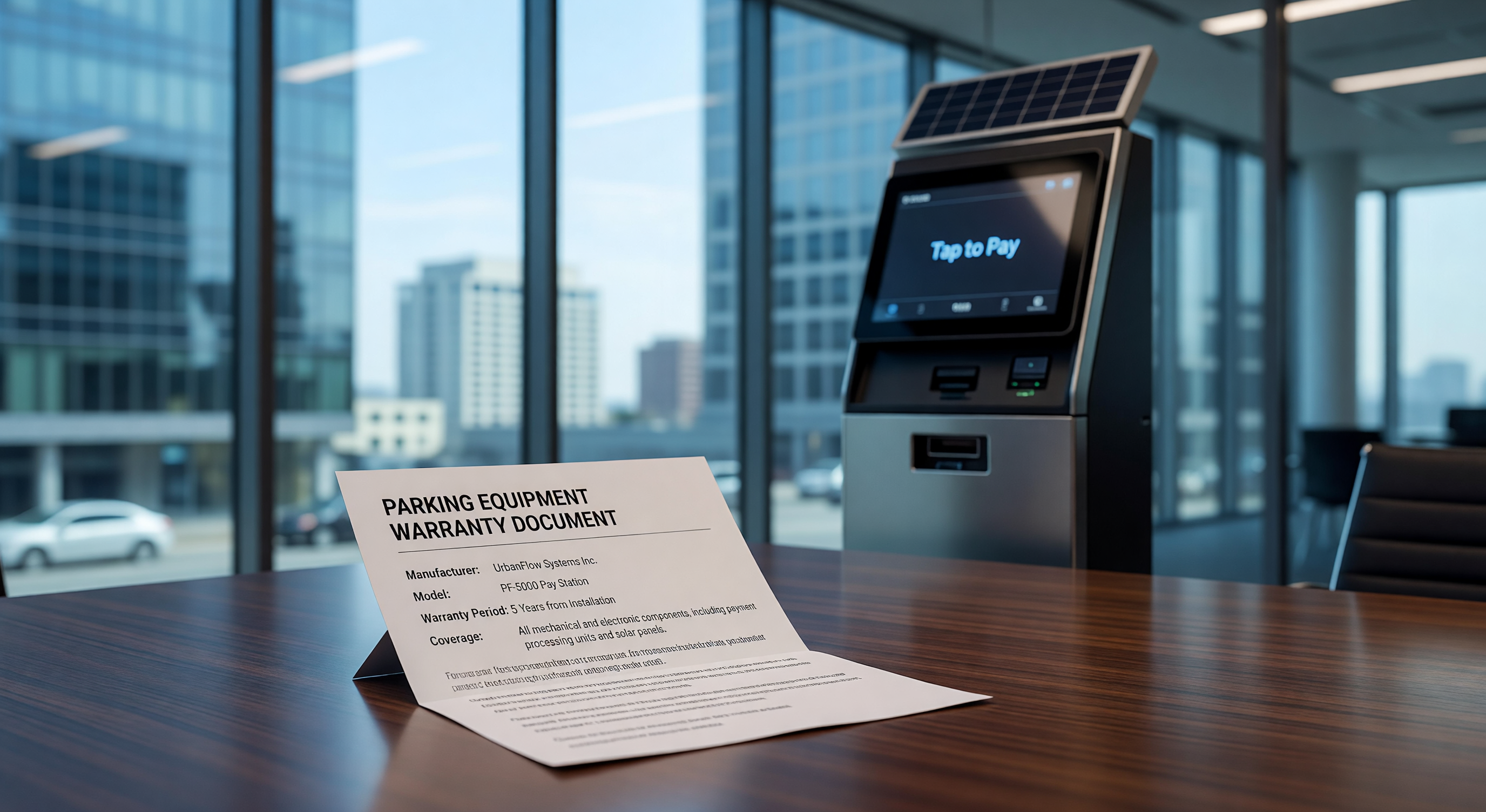
Fill this in from the actual warranty documents — not sales summaries. Request the full warranty document before selection, not after contract signing.
Frequently Asked Questions
Should I negotiate warranty terms in the equipment contract? Yes. Response time SLAs, coverage scope, and parts availability commitments are all negotiable — especially for large purchases. Vendors who won’t negotiate on service response time for revenue-critical equipment are signaling limited service capacity.
What should I do when a warranty claim is disputed? Document everything from the moment of failure: timestamps, photos, operational logs, and service request records. Escalate through vendor management channels in writing. If resolution stalls, reference the specific warranty language in written communications — vague complaints get vague responses.
Is a longer warranty always better? Not necessarily. A 3-year warranty from a vendor with no local service capacity is less valuable than a 1-year warranty from a vendor with next-day technician availability. Evaluate the warranty against the service infrastructure backing it.
How do I verify that warranty claims are processed quickly? Ask reference customers specifically: “How many warranty claims have you filed, and what was the typical response and resolution time?” Warranty response on a reference call reveals more than any written commitment.
Key Takeaway
Warranty duration is the least important term in a parking equipment warranty. Response time, on-site coverage, parts availability, and exclusion language determine whether the warranty translates to operational continuity when equipment fails — and equipment in commercial parking environments always eventually fails.