The lease-vs-buy decision for parking equipment is more nuanced than it first appears. The intuitive answer — buying is cheaper long-term, leasing is better for cash flow — is often true, but the specific economics of parking equipment create scenarios where leasing offers advantages that go beyond monthly cash flow management.
This guide provides a rigorous framework for comparing the total cost of ownership across lease and purchase scenarios, including the factors that shift the balance in each direction.
Why Parking Equipment Procurement Financing Deserves Analysis
Parking equipment has characteristics that complicate the standard lease-vs-buy analysis:
Long useful life but uncertain technology shelf life. A barrier gate motor may run reliably for 15 years; the PARCS software driving it may be obsolete in 7. Technology refresh cycles are difficult to predict and can significantly affect the economics of a long-term purchase.
High maintenance cost relative to purchase price. Over a 10-year period, maintenance and consumables often exceed the original equipment purchase price. Lease agreements that include maintenance change the cost comparison substantially.
Captive service relationships. Some manufacturers use proprietary hardware and software combinations that create de-facto service monopolies. When the manufacturer controls all service and parts supply, purchase economics change relative to a commodity equipment market.
Balance sheet implications. For operators with capital constraints or balance sheet ratio requirements, equipment financing structure affects financial reporting in ways that influence the effective cost of each approach.
Building the TCO Comparison
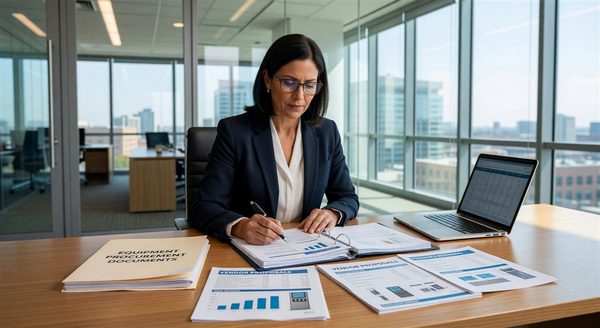
A meaningful lease-vs-buy comparison requires building 10-year total cost models for each scenario.
Purchase Scenario Components
Year 0 costs:
- Hardware purchase price
- Installation and commissioning
- First-year software licensing (if applicable)
Annual recurring costs:
- Software/SaaS licensing
- Preventive maintenance contract
- Estimated break-fix repairs (budget 3–5% of equipment cost annually)
- Consumables (thermal paper, gate arms, printer heads, batteries)
End-of-life costs:
- Removal and disposal
- Technology refresh capital (partial or full system replacement)
Tax treatment:
- Depreciation schedule for purchased equipment (typically 5–7 year MACRS for parking equipment)
- Section 179 or bonus depreciation eligibility
Lease Scenario Components
Monthly payment:
- Equipment lease payment (principal + finance cost)
- Maintenance included or excluded?
- Software licensing included or excluded?
- Escalation clauses in the payment structure?
Residual value and end-of-term:
- $1 buyout (finance lease): effectively a purchase with different accounting treatment
- Fair market value buyout: pay current market value to own at term end
- Return and refresh: return equipment, start new lease with updated technology
Tax treatment:
- Operating lease: monthly payments fully deductible as operating expense
- Finance lease: may require balance sheet capitalization depending on accounting standards (ASC 842 guidance has changed operating lease treatment for most entities)
Sample 10-Year Comparison
These illustrative figures use a mid-size parking system (2-lane garage with pay station and PARCS software):
| Cost Element | Purchase | Lease (Operating) |
|---|---|---|
| Year 0 hardware + installation | $85,000 | $0 |
| Annual lease payment (5-year) | — | $22,000 |
| Annual software licensing | $6,000 | Included |
| Annual maintenance contract | $7,500 | Included |
| Estimated break-fix (10-yr) | $25,000 | Included |
| Technology refresh (year 7) | $35,000 | Included via new lease |
| Total 10-year undiscounted | $233,000 | $220,000 |
In this example, the lease scenario has a modestly lower undiscounted cost — primarily because the included maintenance and technology refresh eliminate the unpredictable capital outlays in years 5–10.
The actual result depends heavily on your specific costs, lease structure, and discount rate assumptions. Build the model with your actual vendor quotes.
When Purchasing Makes More Financial Sense
You have access to low-cost capital. If your organization can finance the purchase at 3–4% or fund it from reserves, the financing cost of a lease (typically 6–10% implicit interest rate) eliminates the lease’s cash flow advantage.
Your equipment has long functional life with stable technology. Barrier gates, intercom systems, and other mechanical equipment with 12–15 year useful lives and stable software requirements benefit from outright purchase. The asset depreciates slowly; there’s no technology refresh risk to hedge against.
You want full control of maintenance. Lease agreements often restrict maintenance to the manufacturer’s service program. Facilities with in-house maintenance capability or preferred third-party service providers may pay a premium for the included maintenance in a lease that doesn’t benefit them.
You expect facility sale. Equipment ownership transfers cleanly in a property sale. Lease obligations complicate asset transfers and may require renegotiation or early termination fees.
When Leasing Makes More Financial Sense
Technology refresh risk is high. PARCS software platforms, LPR systems, and payment technology evolve rapidly. A lease with an end-of-term refresh option lets you return equipment before it’s obsolete and start fresh with current technology.
Capital is constrained or costly. If alternative uses of the purchase capital generate higher returns than the lease finance cost, leasing frees capital for higher-return deployment.
Predictable cash flow is a priority. Leases convert capital expenditures to fixed operating expenses — simplifying budget planning and eliminating the variance of unpredictable break-fix costs.
Maintenance is a management burden. For facilities with limited technical staff and service vendor relationships, all-inclusive leases transfer the service responsibility entirely. This has real value beyond the accounting.
Accounting treatment is favorable. For some organizations, operating lease treatment keeps large equipment assets and associated liabilities off the balance sheet. Review current ASC 842 treatment with your accountant — the 2019 lease accounting standard changes affected how many operating leases are reported.
The Hybrid Approach: Selective Ownership
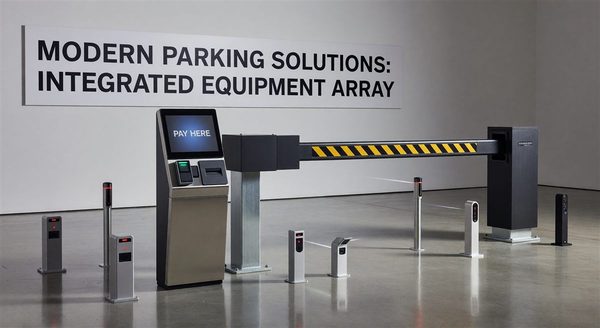
Many operators take a hybrid approach: purchase long-life mechanical equipment (gates, intercom hardware, physical infrastructure) and lease technology-heavy components (PARCS software terminals, LPR cameras, pay station payment modules).
This captures the low TCO of ownership for stable equipment categories while using leasing to manage technology refresh risk in fast-changing categories.
Frequently Asked Questions
What interest rate should I expect in a parking equipment lease? Implicit interest rates in equipment leases vary by creditworthiness and term, but typical ranges for parking equipment are 5–9%. Compare this against your cost of capital when evaluating lease economics.
Can lease terms be negotiated? Yes. Term length (24–60 months), monthly payment, maintenance inclusion, end-of-term buyout options, and early termination terms are all negotiable. Volume purchases create the most negotiating leverage.
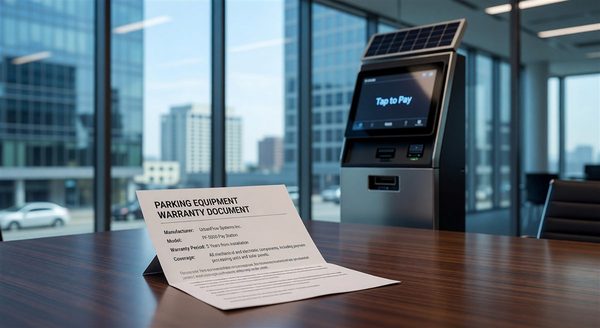
What happens if the equipment fails and the manufacturer goes out of business during a lease? This is a legitimate risk in a lease. The equipment obligation survives the manufacturer — you may still owe lease payments on equipment that can’t be serviced. Evaluate manufacturer financial stability as part of the vendor selection, not just the pricing comparison.
Is there a tax advantage to leasing vs. buying? In many cases, operating lease payments are fully deductible in the year paid, which accelerates the tax benefit relative to depreciation of a purchased asset. Section 179 expensing and bonus depreciation can narrow this gap for purchase scenarios. Consult your tax advisor for your specific situation.
Key Takeaway
The lease-vs-buy decision for parking equipment ultimately depends on your cost of capital, technology refresh requirements, maintenance capability, and balance sheet priorities — not on a universal rule. Build the 10-year model with actual quotes from your vendor before committing to either path.