Parking enforcement has shifted from a labor-intensive, chalk-and-ticket operation to a data-driven system where a single officer with a vehicle-mounted LPR system can verify every plate in a multi-thousand-space facility in under two hours. The technology is proven, widely deployed, and increasingly cost-competitive with traditional enforcement staffing.
But LPR enforcement equipment involves meaningful capital investment and operational change. This guide provides a buyer’s perspective on the major enforcement technology categories, the specifications that matter for real-world accuracy, and the procurement considerations that affect long-term operational cost.
The Case for Technology-Based Enforcement
Traditional time-limit enforcement using chalk or tire markers requires officers to physically mark tires on a first pass, wait the time-limit period, and re-check each space manually. A single officer working a surface lot can typically enforce 200–400 spaces per shift using this method.
LPR-based enforcement captures every plate in a drive-by pass, timestamps the read, and compares it against the previous read in the same location. Vehicles that haven’t moved within a defined time period are flagged as violations — no chalk, no marker, no manual tracking.
A vehicle-mounted LPR system with rear-camera coverage can process 500–1,500 spaces per hour depending on lot layout and drive pattern. The same officer who manually enforced 400 spaces per shift can enforce 2,000–4,000 spaces per shift with LPR — a 5–10x productivity improvement.
LPR System Categories
Vehicle-Mounted LPR
Roof-mounted or trunk-mounted LPR camera arrays are the dominant enforcement configuration for mobile patrol. Systems typically use 2–4 cameras configured for left and right side reads, often with an additional forward or rear camera.
Hardware specifications to compare:
- Camera resolution: 2–5MP per camera; higher resolution improves accuracy at night and with dirty or damaged plates
- Frame rate: 15–30 fps; higher frame rate improves read rates at vehicle speeds above 15 mph
- IR illumination range: Adequate for driving speed and lane width — typically 20–40 feet
- Read speed: Plates per second at specified driving speed
- Accuracy claim: Require real-world accuracy figures from comparable enforcement environments, not laboratory conditions
Processing unit: Mobile LPR systems process plate reads on an in-vehicle computer and sync to the enforcement management platform via LTE. Evaluate processing speed and connectivity reliability — missed sync during a patrol creates gaps in the violation timeline.
Fixed LPR for Parking Access
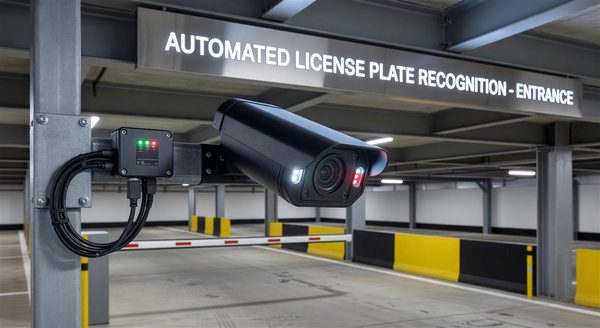
Fixed LPR cameras at entry/exit points serve access control functions (permit lot access) rather than enforcement patrol, but the two systems can share a plate database. Vehicles with valid permits are automatically granted access; vehicles without permits trigger a violation alert.
Fixed LPR requires careful mounting to maintain consistent read angles across all vehicle heights and entry speeds. See our guide on LPR camera mounting best practices for specification details.
Handheld LPR Units
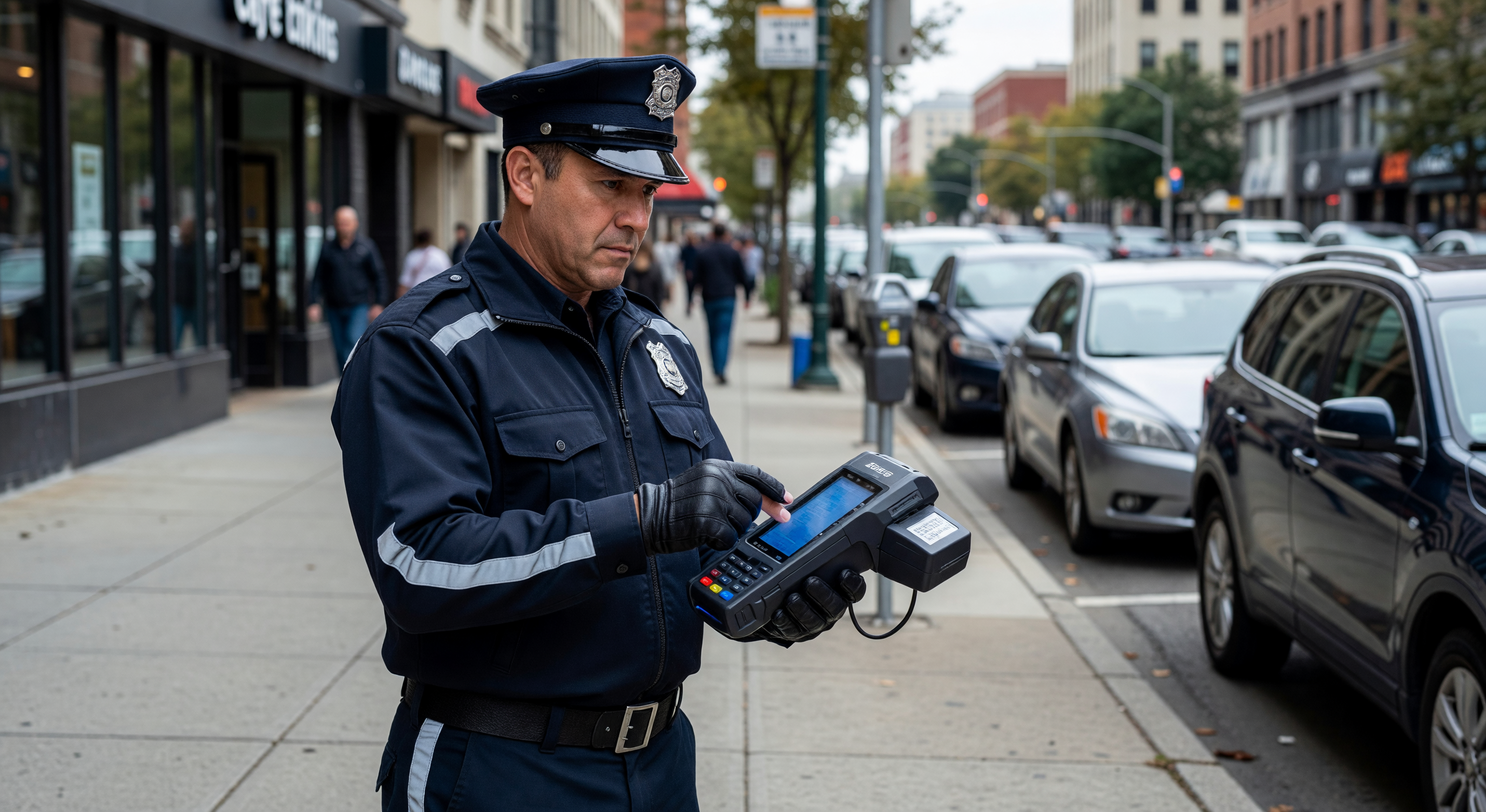
Handheld devices allow officers on foot to capture plate reads for permit verification in pedestrian-scale environments (garages, surface lots where vehicle patrol isn’t practical). These are appropriate as a supplement to vehicle-mounted systems, not as a primary enforcement tool at scale.
Permit Verification and Database Integration
LPR enforcement is only as accurate as the permit database it references. The workflow:
- LPR captures a plate read
- System queries the permit database in real time
- Plate is validated as permitted, time-limited, or unpermitted
- Officer receives a notification for violations
This workflow requires real-time connectivity to the permit management system. Evaluate:
- Database sync: How frequently does the field LPR system sync with the permit database? Real-time API connection is preferable to hourly batch updates — permits sold or cancelled between batch cycles create false violations or missed enforcement.
- Multi-facility support: If you manage multiple lots with different permit populations, verify the system handles multiple database queries simultaneously.
- Guest and temporary permit integration: Can the system accommodate short-term permits (daily, event-based) issued through a different system than the base permit database?
Chalking Alternatives for Low-Tech Environments
Not every parking enforcement situation justifies LPR investment. For facilities with low violation rates, limited budgets, or temporary enforcement needs, several lower-tech alternatives to chalk exist.
Tire marker apps: Smartphone-based apps using GPS and camera allow officers to document a tire position in a specific space and set a timer for re-check. When the officer returns, the app compares the current image with the documented position. More defensible than chalk in jurisdictions where chalk enforcement has faced legal challenges.
Permit display verification: Facilities using hang-tag or dashboard permits still require visual verification, but RFID or QR permit systems allow contactless verification at low cost. An officer with a handheld reader or smartphone can verify permit validity without touching the vehicle.
Time-stamped camera patrols: Fixed cameras on a patrol schedule can document occupancy over time. While less sophisticated than LPR, camera documentation provides a timestamp record that supports violation issuance without manual chalk marks.
Citation Issuance and Adjudication Equipment
The enforcement equipment doesn’t end with violation detection. The citation workflow requires its own hardware:
Mobile citation printers: Handheld thermal printers that connect to enforcement devices via Bluetooth. Look for weather resistance, drop rating (officers working in the field drop things), and battery life sufficient for a full shift.
Citation management software: Integrates with LPR data, generates citations, tracks payment status, manages appeals, and interfaces with the financial system. Evaluate whether this is an integrated component of the LPR platform or a separate third-party system requiring integration.
License plate reader accuracy reporting: For citation defensibility in adjudication, the LPR system must generate a timestamped image record for each violation. Require this as a mandatory feature.
Total Cost of Enforcement Technology
A vehicle-mounted LPR system for a single enforcement vehicle runs $15,000–$45,000 for hardware, depending on camera count and mounting complexity. Annual software/data costs run $3,000–$8,000 per vehicle. Maintenance contracts add $1,500–$3,000 per year.
Compare this against the alternative: an enforcement officer spending 80% of their shift on manual tire marking and re-checks generates roughly the same salary cost at significantly lower throughput. Facilities with more than 500 enforcement-priority spaces typically see positive ROI on LPR within 18–36 months of deployment.
Frequently Asked Questions
Is LPR enforcement legally challenged anywhere? Chalk-tire marking enforcement has faced legal challenges in some jurisdictions on Fourth Amendment grounds. LPR enforcement, being a passive observation rather than a physical mark, has generally been upheld but check local case law and regulations before deployment.
What accuracy rate should I require from an LPR vendor? Real-world parking enforcement environments see LPR accuracy rates of 94–98% under typical conditions. Factors that reduce accuracy: dirty, damaged, or obscured plates; extreme low-light conditions without adequate IR illumination; unusual plate fonts (some states have decorative plates with reduced machine readability).
Can the same LPR system be used for both enforcement and access control? Yes, and many facilities integrate both functions on a shared platform. The key requirement is a unified plate database that serves both the access control (permit lot gates) and the enforcement patrol function from the same permit record.
How long do LPR camera systems last? Vehicle-mounted cameras in enforcement use typically have 4–7 year service lives, with camera replacement required before the computer processing unit. Software platform longevity varies by vendor — evaluate vendor stability and upgrade path as part of the selection.
Key Takeaway
LPR enforcement equipment pays for itself in labor efficiency, but the investment is only fully realized when the permit database integration is solid and citation workflow is streamlined. Buy the enforcement platform, not just the camera hardware.