Going gateless is the most talked-about shift in parking access and revenue control right now. The pitch is compelling: no boom arms to replace, no ticket jams, faster throughput, and a cleaner customer experience. But operators who assume that removing the gate means removing most of their equipment spend often find themselves surprised. A free-flow PARCS still requires a significant hardware and software stack — just a different one.
This guide breaks down what equipment a gateless system actually requires, what it eliminates, and where the tradeoffs sit so buyers can write accurate scopes and budget correctly.
What “Gateless” Actually Means
Free-flow parking (also called ticketless or frictionless parking) removes the physical barrier arm at entry and exit lanes. Vehicles drive through without stopping to collect a ticket or present a credential. Revenue control shifts from the gate itself to a combination of license plate recognition, back-end enforcement, and pre-authorized payment.
The gate is gone. The revenue control problem is not.
Every transaction that the gate previously enforced — confirming payment, validating a permit, recording duration — must still happen. It just happens through cameras, software, and enforcement workflows rather than through a physical barrier.
LPR Cameras: The Load-Bearing Component
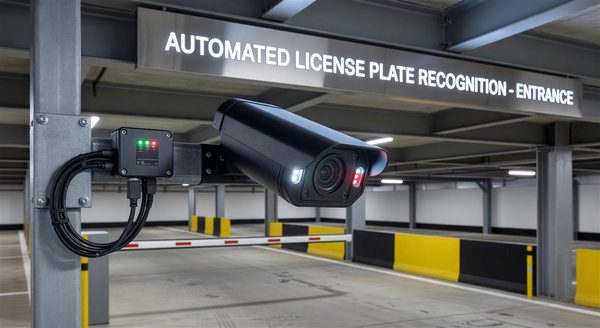
In a gated system, the gate arm is the enforcement mechanism. In a gateless system, LPR cameras perform that function. This makes camera selection and placement the most critical equipment decision in any free-flow deployment.
Camera specifications that matter
Read accuracy is the primary specification. Well-deployed fixed LPR cameras routinely achieve 97–99% capture rates under good conditions. What matters for RFP purposes is read accuracy across the full operating envelope: nighttime, rain, snow, partial obstructions, and vehicles with dirty or damaged plates.
Key specifications to require:
- Read accuracy: Specify minimum 97% daytime and 94% nighttime read rates at design throughput
- Standoff distance: Camera placement at 3–5 meters from the target zone with 12–18° vertical angle is standard for lane-based LPR
- IR illumination: Integrated IR illuminators rated for the lane width and standoff distance; verify the illumination pattern matches the camera’s field of view
- IP rating: IP66 or IP67 minimum for outdoor lane installations; verify housing meets IK10 vandal resistance
- Frame rate: 25–60 fps with hardware-triggered capture at vehicle detection events
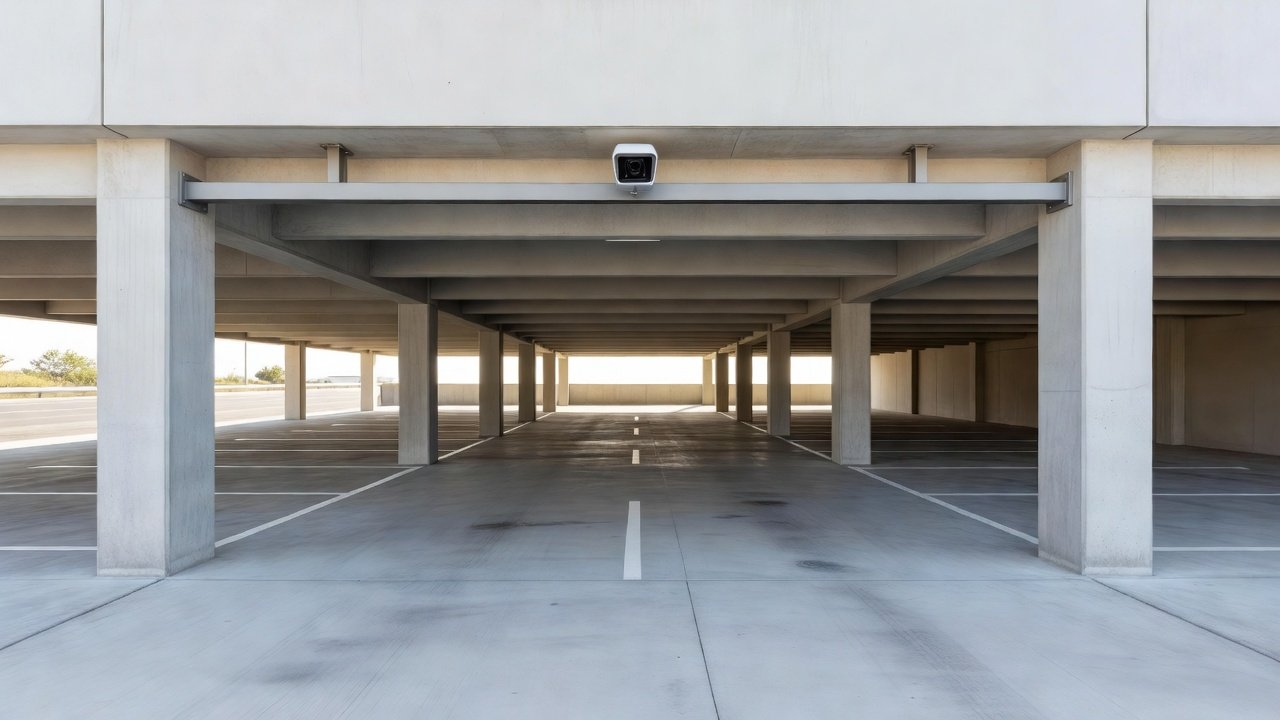
For multi-level garages, LPR at exit ramps often requires wider angle cameras or secondary confirmation cameras due to approach geometry. Require vendors to provide a site-specific camera placement plan with simulated capture zones before equipment is specified.
Entry vs. exit camera pairs
Most gateless deployments use camera pairs: one at entry (capturing license plate on arrival), one at exit (calculating duration and confirming payment). Some operators add overhead cameras in fee plazas or at elevator lobbies for occupancy counting. Each camera placement has a distinct purpose and should be specified separately.
Pay Stations: Required, But Repositioned
Removing the gate does not eliminate the pay station. Most gateless deployments still require physical pay stations — they’re simply repositioned and repurposed.
In gated systems, pay stations are often located at exit lanes. In gateless systems, they move to pedestrian-accessible locations: elevator lobbies, stairwells, and parking aisles. The driver pays before returning to their vehicle rather than at an exit lane.
What changes at the pay station
- Input method: Pay-by-plate rather than pay-by-ticket. The driver enters their license plate number (or scans a QR code) rather than inserting a ticket.
- Receipt options: Digital receipts by email or SMS replace printed tickets as the primary record.
- Footprint: Some operators reduce pay station count in gateless environments, particularly in facilities with strong mobile payment adoption. Others maintain full density for cash-paying customers.
- Validation workflow: Validation codes still work at pay stations; the validation reduces the owed amount before plate-based payment is confirmed.
EMV-compliant payment terminals, contactless acceptance (NFC and tap), and P2PE encryption remain required regardless of whether the facility has gates. PCI DSS v4.0 requirements apply equally to gateless pay stations.
Intercoms and Help Stations
This is the component buyers most commonly underestimate in gateless conversions. In a gated system, the intercom at the entry or exit lane is physically attached to the lane equipment — customers know exactly where to go for help. In a gateless system, that geographic anchor is removed.
Customers who have payment questions, dispute enforcement, or can’t get mobile payment to work have no obvious place to go. Operators who remove all lane intercoms when going gateless tend to generate higher call volumes and customer complaints.
The practical solution is distributed help points: QR codes at pay stations and on posted signage that launch a web-based call to a parking operations center, plus at least one staffed or video-monitored intercom location per facility level in larger garages.
Some PARCS software vendors provide mobile endpoint tools that let customers initiate help calls by scanning a posted code rather than locating a physical intercom. This approach works well in surface lots and open-deck garages where routing customers to a fixed intercom location is impractical.
Enforcement Hardware
Gateless systems enforce payment through monitoring and violation workflows rather than physical containment. This requires equipment that gated facilities often don’t have:
Mobile enforcement devices: Handheld or vehicle-mounted LPR units used by parking staff to identify unpaid vehicles in the facility. These compare plate reads against the payment database in real time.
Posted signage: Clear, high-visibility signage explaining the pay-by-plate process is operational equipment in a gateless facility — not an afterthought. Regulators in several states have begun requiring specific signage disclosures for facilities that issue automated violation notices.
Violation processing integration: Gateless systems generate violation records automatically when a plate appears in exit camera reads without a matching payment record. Those records must route to a violation management system or collections workflow. This is a software specification, but it often requires hardware integration with enforcement handheld devices.
PARCS Management Software
The software layer in a gateless system carries more operational load than in a gated system. Key functional requirements that should appear in any gateless RFP:
- Real-time plate match between entry reads, payment records, and exit reads
- Configurable grace periods (typically 15–30 minutes for short visits or payment disputes)
- Validation partner portal with code issuance and real-time redemption
- Mobile payment platform integration with session handoff
- Enforcement export for violation records with plate, timestamp, and photographic evidence
- Reporting on read accuracy rates, unmatched exits, and enforcement resolution rates
Open-architecture requirements matter more in gateless systems than in gated ones, because enforcement, payment, and access often come from different vendors. Require documented APIs (REST/JSON preferred) and confirm that the PARCS software vendor supports third-party integrations for payment, enforcement, and validation.
What Gateless Actually Eliminates
For budget clarity, the equipment a free-flow conversion does remove:
- Barrier gate arms and motors
- Ticket dispensers (entry lane ticket printers)
- Loop detectors at entry/exit (replaced by camera-based vehicle detection in most systems)
- Exit verifier units (the device that reads the ticket before raising the gate)
The capital saved on this equipment is real. In a typical two-lane entry, two-lane exit configuration, removing gate and ticket equipment eliminates roughly $40,000–$80,000 in hardware cost depending on specification level — offset in part by the cost of additional LPR cameras, help stations, and enforcement handheld devices.
Getting the Scope Right
Gateless systems are not simpler than gated systems — they distribute complexity differently. The equipment list is shorter but each component carries more operational weight. LPR camera placement and read accuracy are the foundation everything else depends on.
Buyers writing RFPs for free-flow conversions should require vendors to provide a camera placement plan with simulated capture zones, specify minimum read accuracy rates across the full operating envelope, and address the enforcement and help station workflow explicitly. These specifications separate vendors who understand gateless operations from those offering a gate removal with cameras attached.