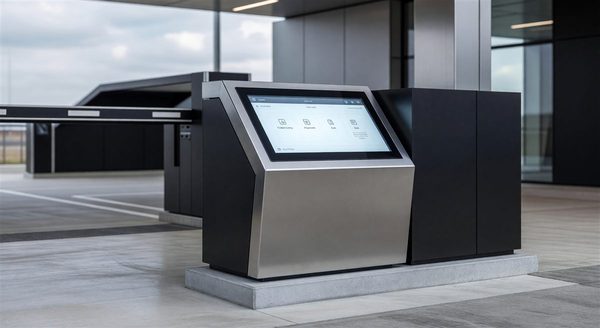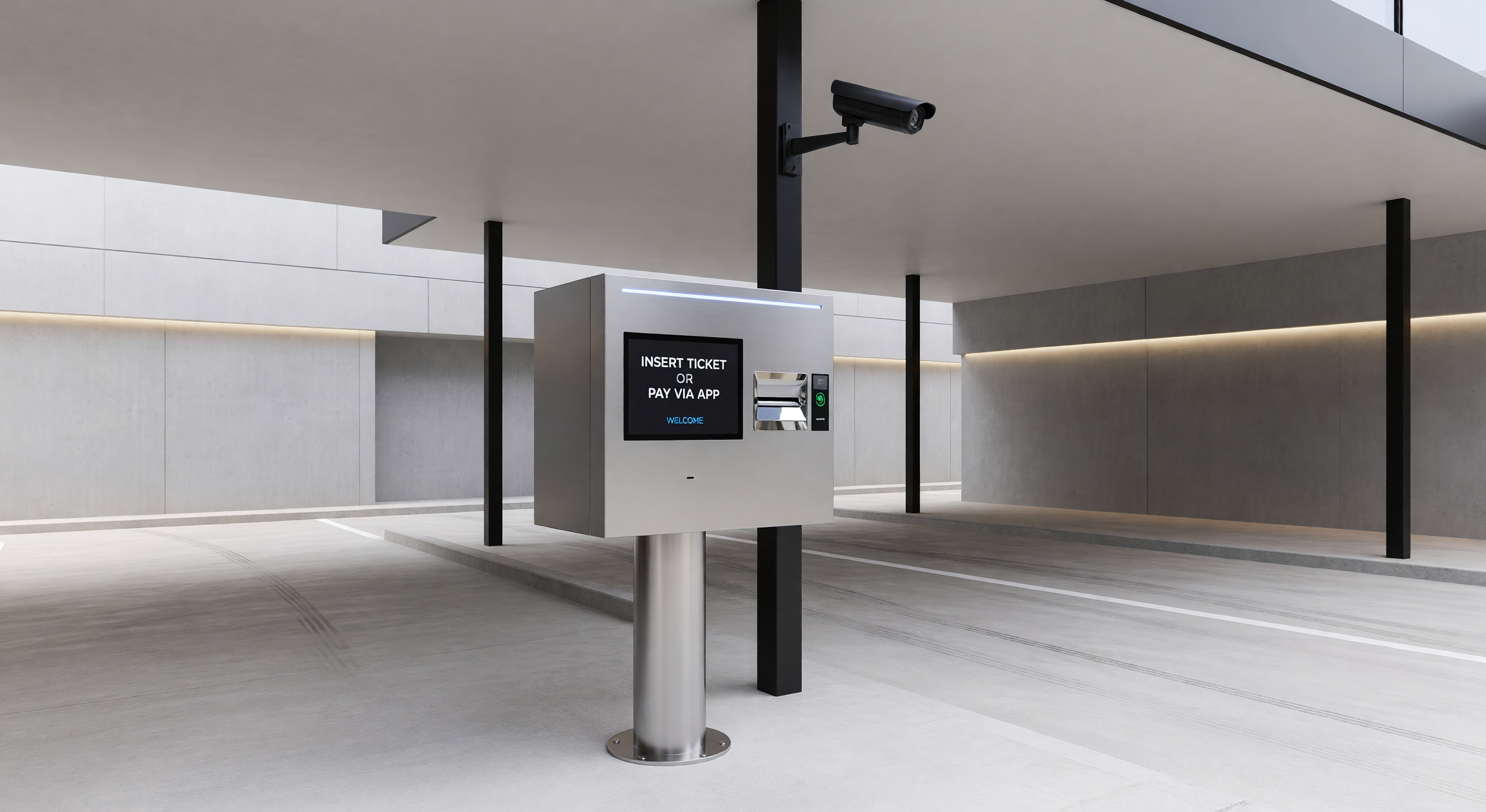
Parking ticket dispensers are the entry terminal in ticket-based PARCS systems — every vehicle that enters the facility receives a ticket that initiates the transaction record. A dispenser that jams, misfires, or fails to accurately timestamp creates downstream problems in payment and exit: rate miscalculations, dispute resolution complications, and customer frustration at exit lanes.
Despite their operational centrality, ticket dispensers are often underspecified in procurement documents — a single paragraph describing “a ticket dispenser compatible with the PARCS system” leaves significant performance variation unconstrained. This guide covers the specifications that differentiate reliable from problematic dispensers.
Ticket Technology Options
Thermal Tickets
Thermal tickets are the current standard for commercial parking entry systems. The dispenser uses a thermal printer to print variable information (timestamp, facility code, rate information, QR code or barcode) on heat-sensitive paper at the moment of issuance.
Advantages:
- Variable information per ticket allows timestamping, rate encoding, and barcode generation
- No ink or ribbon consumables — only paper
- High-speed printing (typical thermal printers output a ticket in under 2 seconds)
- Barcode and QR code printing allows machine-readable validation at pay stations and exit
Paper specification: Thermal ticket stock is typically 50–80mm wide with a pre-perforated or pre-cut stub, wound in rolls. Paper quality affects print head longevity, barcode readability, and ticket durability — specify thermal paper from the dispenser manufacturer’s approved list.
Magnetic Stripe Tickets
Magnetic stripe tickets encode data on a magnetic stripe (similar to credit cards) rather than printed barcodes. They provide a more secure and higher-capacity data carrier than barcodes.
Applications: Magnetic stripe tickets are used in higher-security environments where barcode counterfeiting is a concern, and in older PARCS systems that were designed around magnetic stripe as the standard. For new installations, QR/barcode thermal tickets offer comparable functionality at lower per-ticket cost.
RFID Tickets
Some systems issue paper tickets with embedded RFID inlays, allowing the ticket to be read without physical insertion (proximity reading). These are more expensive per ticket but provide a contactless payment experience at pay stations and exit terminals.
Dispenser Specifications
Cycle Rate and Throughput
Cycles per hour: A cycle is one ticket dispense event. High-volume entry lanes may process 200–400 vehicles per hour during peak periods. The dispenser must complete the cycle — sensing the vehicle, processing the request, printing the ticket, advancing the ticket, and presenting it — within the time available for the vehicle to collect and proceed.
Standard commercial dispensers have rated cycle times of 3–6 seconds per ticket. For lanes targeting 400 vehicles/hour (9-second headway between vehicles), a 4-second cycle time provides adequate margin.
Rated cycle life: Dispensers are rated in total cycles. Commercial units typically carry ratings of 2,000,000–8,000,000 cycles. At 1,000 cycles/day, a 3,000,000-cycle unit has a theoretical life of 3,000 days (8+ years). Verify the cycle rating against your expected daily transaction volume.
Print Head Rating
The thermal print head is the primary wear component. Print heads are rated in kilometers of media printed or millions of lines printed. Higher-rated print heads require less frequent replacement.
For ticket dispensers issuing 500 tickets/day at 8 inches per ticket (standard parking ticket length):
- Daily media: 500 × 8 inches = 4,000 inches = 333 feet = 101 meters
- Annual media: 37 km
A print head rated for 200 km of media has approximately 5 years of expected life at this usage rate. Verify against the vendor’s specification.
Paper Roll Capacity
Larger paper rolls reduce service frequency. For a dispenser issuing 500 tickets/day, paper roll capacity directly determines restocking frequency:
- 2,000-ticket roll: restocking every 4 days
- 5,000-ticket roll: restocking every 10 days
- 10,000-ticket roll: restocking every 20 days
Larger rolls are available for high-volume applications. Verify that the dispenser’s roll holder can accommodate the larger roll diameters.
Jam Detection and Recovery
Ticket jams in an entry dispenser block the entry lane until a technician clears the jam. Dispenser specifications should include:
Jam detection: Sensors that detect a jammed ticket and trigger a fault alert Automatic rejection: Mechanism to retract and reject a misprinted or partial ticket before it reaches the customer Manual access: Easy-access door to the paper path for staff jam clearance without tools Jam logging: Event logging of jam occurrences with timestamp for PM trend analysis
Environmental Specifications
Entry lane dispensers are exposed to temperature extremes, precipitation, and vehicle exhaust. Environmental specifications:
Operating temperature range: Specify the range expected at your facility, including both summer highs and winter lows. Verify the dispenser’s rated range includes your extremes with margin.
Humidity: Parking entry lanes experience rain splash, fog, and humidity extremes. IP54 minimum for outdoor installations; IP55 or better for locations with regular precipitation exposure.
Solar radiation: Direct sun exposure on a southern-facing dispenser raises internal temperatures significantly above ambient. Verify the operating temperature spec accounts for solar loading if the installation is sun-exposed.
Vibration: Vehicle-mounted lane bollard vibration from vehicle impacts and road vibration can affect dispenser mechanisms. Dispensers should be specified with vibration tolerance appropriate for the lane mounting method.
Integration Requirements
Loop Detector Interface
The dispenser must be triggered by a vehicle detection signal — typically from an inductive loop detector or an above-ground sensor. The dispenser’s trigger input should match the detection system’s output signal format (relay close, NPN open-collector, or other standard interface).
Verify trigger input compatibility with your loop detector or sensor vendor’s output specification before finalizing dispenser selection.
PARCS Software Interface
The dispenser communicates ticket issuance events to the PARCS software for transaction logging. Communication protocols vary:
- Serial RS-232: Traditional interface, still common in legacy PARCS systems
- Ethernet/IP: Modern networked dispensers communicate directly over the facility network
- Wiegand: Some older dispenser configurations output ticket information in Wiegand format
Confirm that the dispenser’s communication protocol is supported by your PARCS platform. An incompatible interface requires an adapter or protocol converter that adds cost and a potential failure point.
Barcode/QR Symbology
Verify that the ticket’s printed barcode or QR code format matches the read capability of your pay stations and exit readers. Symbology mismatches (QR vs. Code 39 vs. Code 128) produce unreadable tickets at payment stations.
Frequently Asked Questions
How do we calculate the right paper roll stocking level? Stock a minimum of 4 weeks of consumption (daily tickets × 28 days) plus 1 full replacement roll per dispenser as a buffer. For a 500-ticket/day dispenser with 10,000-ticket rolls, stock 2–3 additional rolls per dispenser.
What causes tickets to present incompletely (partial ticket ejection)? Partial ejection occurs when the paper advance mechanism fails to complete the ticket advance cycle. Common causes: worn drive rollers, paper curl that prevents smooth advancement, or paper that’s too thick for the advance mechanism. Check drive roller condition and verify paper specification against the dispenser requirement.
Can we use aftermarket thermal paper in branded dispensers? In principle, yes — thermal paper is a commodity. In practice, dispenser manufacturers often recommend specific paper grades calibrated for their thermal print heads. Using off-spec paper can cause premature print head wear, reduced print quality, and potentially void maintenance agreements. Verify aftermarket paper meets the manufacturer’s specified sensitivity and weight before switching.
What is the typical service life for a commercial ticket dispenser? With proper PM, 10–15 years is achievable for the housing and mechanical components. Print heads require replacement at their rated media limit. Paper drive rollers typically need replacement every 3–5 years. Full dispenser replacement before 10 years is typically due to PARCS platform obsolescence (when the software no longer supports the hardware) rather than mechanical failure.
Key Takeaway
Ticket dispenser specifications that matter most are cycle rate and rated life (to confirm adequate throughput at your transaction volume), print head rating (for maintenance planning), jam recovery features (to minimize lane downtime from paper jams), and PARCS compatibility (to ensure the dispenser communicates with your access control platform). Don’t accept vague compatibility claims — require specific protocol documentation.